

Welcome to another edition of our Behind the Shop series, where we dive deep into the creative journeys of some of the most inspiring professionals selling on Creative Market. Today, we’re thrilled to introduce you to Nat, the mastermind behind Purple.
Over eleven years as a designer, the artist behind Purple has moved from a career in finance and banking to illustration, collage, stitching, scanning, tearing, and experimenting with whatever material happens to spark her curiosity next. Her collections often begin somewhere even less tangible: with a feeling she wants to give visual form.
The work Purple has created centers a lot of ideas and embrace a change rather than stuck to an idea or an end goal. It allows for a collection to be born from an experience. It embraces for different materials to inspire new ideas and for creativity to help lead the way to new places.
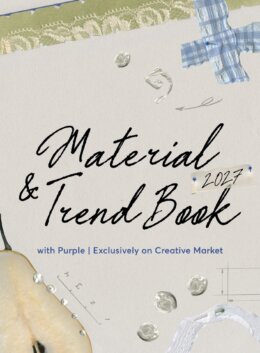
Her latest collaboration with Creative Market, Material Trendbook 2027, brings that philosophy together in five chapters of handmade materials, techniques, and objects created to help other designers experiment, build, and see something new.
This article is part of our Behind the Shop series, where we shed light on the unique challenges and lessons learned by top creative professionals around the world as they try to make a living doing what they love.
What inspired you to pursue graphic design in the first place? What were you working on before?
I’ve been a designer for about eleven years, which also means I’ve spent about eleven years learning how to be one. I’m still learning. The work changes, the tools change, and I change too.
My degree is actually in finance and banking. Design wasn’t something I had been doing since childhood, and switching careers was a conscious decision.
Sometimes, in the mornings, I would draw little pictures on the office whiteboard. I loved doing it. At some point, I thought: I know I can draw, and I get so much pleasure from it—why not try making this my actual job? It sounded like a pretty wonderful way to spend my days.
So I left my job and gave that transition my full attention. I was fortunate: the circumstances allowed me to find my way into the profession fairly quickly. It was exciting and difficult, with a lot to figure out.
My first project was a logo for a rock record shop. My second was a set of T-shirt prints for a church. Quite a change of subject! And that immediately hooked me. I could dive into worlds I knew almost nothing about, learn about them and find my own way to interpret them visually.
“I don’t think you need a lifelong creative backstory to begin.”
I don’t think you need a lifelong creative backstory to begin. You do need to give it attention, put in the work and keep learning. I did that, but I also know the circumstances mattered. I’m very grateful those things came together—and that this is what I get to do now.
When creating a new product, where does your creative process usually start? What inspires you?
There are quite a few ways in. But the starting point that feels most personal to me is a feeling: something that doesn’t have a shape yet, and that I want to find a visual form for.
Several collections in my shop began that way. My body-positive work came from exploring self-acceptance. Metamorphosis grew out of a difficult period in my life. Later, when I felt genuinely good again, I wanted to make something light and almost angelic. That became Healing Collage Pack. I wanted it to express that relief, that sense of being able to breathe a little more freely.
It doesn’t always have to be a major life event. Sometimes it’s my autumn melancholy. Sometimes it’s summer, and I just want something bright, uncomplicated and full of energy. From there, I look for materials that feel right for what I want to express.
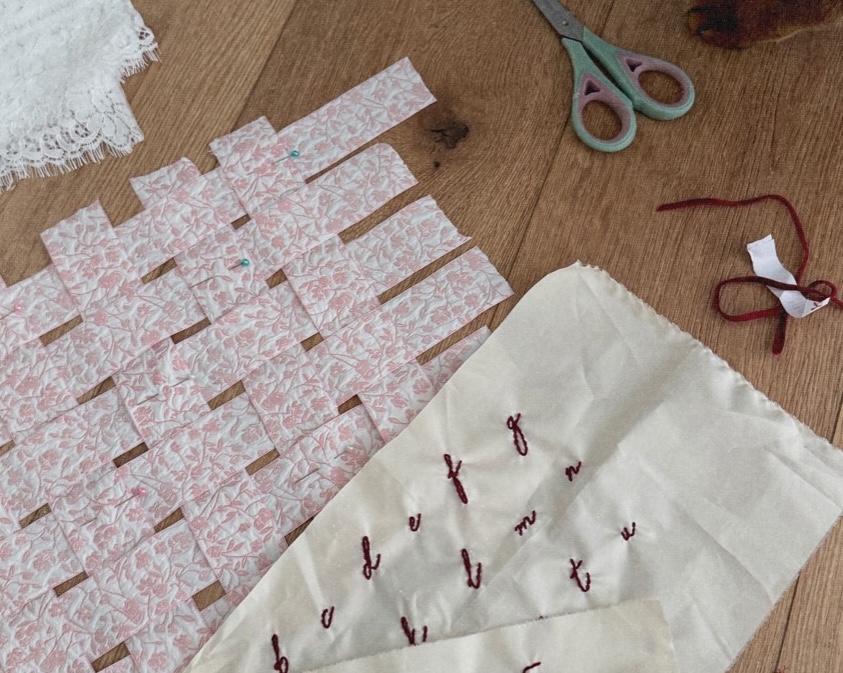
Lately, I’ve also been finding my way in from the opposite direction. I’ll notice a material and think, “Oh, that’s interesting. What could I do with it?” I might not have an idea for a collection yet. I just want to try something.
“Sometimes I choose a material because I know what I want to say. Sometimes I need to play with it first to find out.”
Sometimes I choose a material because I know what I want to say. Sometimes I need to play with it first to find out.
What is your creative process like?
My favourite part is getting so absorbed in the work that I lose track of time. I can look up and realise several hours have passed without me noticing. I have two children, so uninterrupted stretches like that aren’t always possible. When they happen, I really treasure them.
The process itself keeps changing. How I worked in 2020, in 2025 and how I work now are quite different. My circumstances change, and so does what I’m interested in making.
Right now, I keep a list of ideas and write everything down. I love coming up with them—if I had more hours, or perhaps a few extra hands, I would make a lot more of them. From that list, I choose something that feels right for me at that moment, sometimes also considering the season.
Then I decide on the material. What is going to form the foundation of this work? Once I’ve chosen that, the experimenting begins.
I stitch things, tear things, try things just to see what happens. What if I put a piece of developed photographic film in the freezer and scan it afterwards? I want to find out.
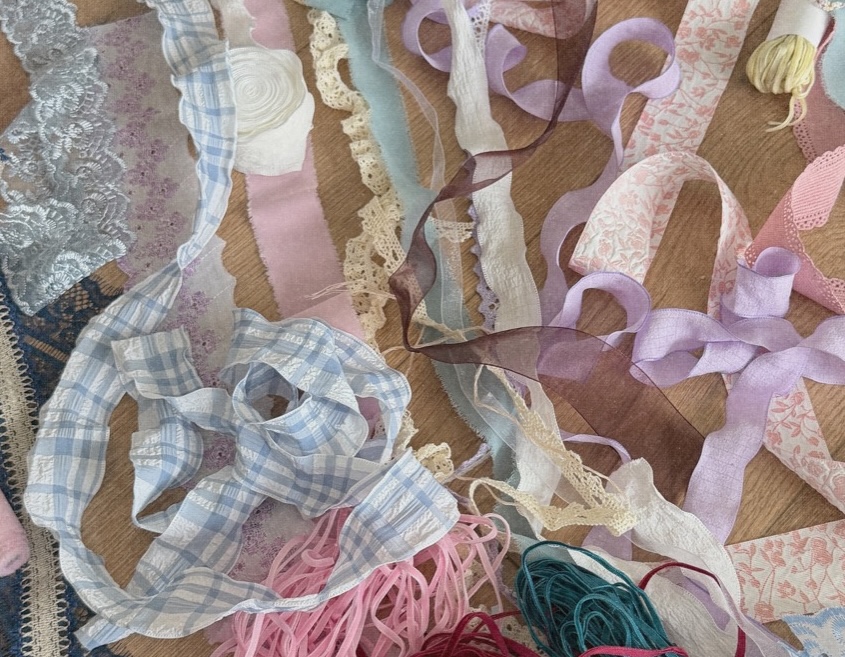
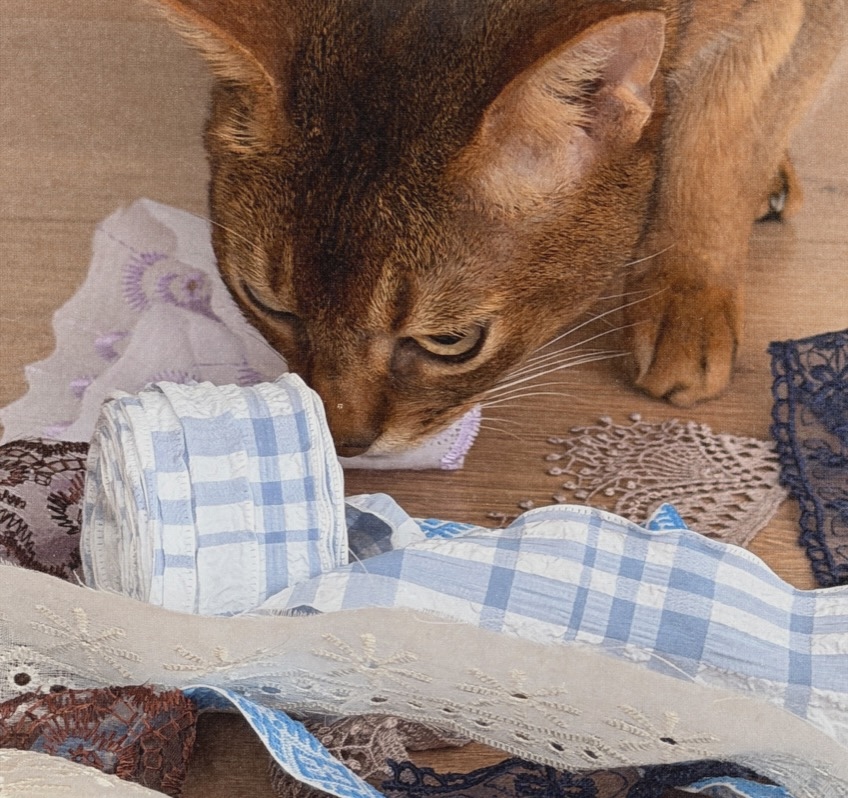
When I have something I want to use, I scan it and prepare the digital files. I try to preserve what made the physical piece interesting in the first place: the texture, the small irregularities, the places where a thread enters the surface. I want those details to survive the transition to the screen.
“Lately, it feels as though a very curious child has woken up inside me, and I’m thoroughly enjoying her company.”
Lately, it feels as though a very curious child has woken up inside me, and I’m thoroughly enjoying her company. Making room for that curiosity is an important part of my process.
Where are you currently based, and how has this location inspired your work?
I’m in the middle of another move, actually. I’ve moved quite often throughout my creative life, so there isn’t one place that has been the backdrop to all my work.
I’m not sure you could look at my collections and tell where I was living when I made them. You would probably have a much better chance of guessing how I was feeling. What is happening in my life tends to show up more clearly than the view from my window.
I’m also a committed homebody, which is perhaps a slightly funny combination with all that moving. Give me time at home with my materials, and I’m very happy.
Still, location does have an influence. I once lived somewhere where Buddhism was deeply woven into everyday life, and I think that experience helped bring more kindness, acceptance and compassion into both my outlook and my work.
The influence just isn’t necessarily literal. Living somewhere with palm trees doesn’t immediately make me want to draw palm trees. A place might change how I feel or what I pay attention to, and that can find its way into a collection without becoming an image of the place itself.
“What is happening in my life tends to show up more clearly than the view from my window.”
Out of all the products you’ve designed, which one is your favourite, and why?
That is a ridiculously difficult question. My favourite changes all the time, and very often it’s the collection I’ve just finished. I’m quite critical of my own work, but I also genuinely love a lot of it. Those two things can coexist!
The collections closest to me are usually the ones that grew out of an experiment or something I was feeling. My body-positive work and Metamorphosis are both examples.
When I first opened my Creative Market shop, I mostly wanted to make beautiful things. Later, I took a break from uploading and spent time on personal projects. During that period, Joel Madden from Good Charlotte and Paris Hilton each sent me messages saying they liked my work. That was wonderfully unexpected. It encouraged me to trust that my own way of seeing things could connect with other people.
When I returned to the shop, I wanted to bring something I hadn’t seen there myself. I started experimenting more and loosening some of the rules I’d made for myself about what a product should be.
Almost everything I’ve made since that shift has been a favourite at some point. What those collections have in common isn’t a particular style—it’s how much freedom I felt while making them.
“What those collections have in common isn’t a particular style—it’s how much freedom I felt while making them.”
That is something I’m genuinely grateful to Creative Market for: having a place where I can turn that curiosity into my work, share it and hear from people who find something in it for themselves. I get to enjoy what I make, and then someone else gets to make something with it. I love that.
Where can readers learn more about you and your work?
My Creative Market shop is the best place to explore my collections, and readers can also find me on Instagram https://www.instagram.com/nat_purple/.
What was the inspiration behind this new product, in collaboration with Creative Market? Which brands do you see it being a good fit for?
The idea began with wanting to do something different from my usual end-of-year bundles. I’ve made collections that bring together existing products at a discount, but this time I wanted to offer something entirely new—especially to the customers who have already bought and supported my work.
When you put so much of yourself into making something and it connects with someone else, that means a great deal. I wanted to respond to that support with new work, rather than another arrangement of things people might already own.
That became Material Trendbook 2027: five chapters exploring different materials, techniques and objects, all created by hand from real materials and designed to work together. I wanted it to look forward, bringing together directions I’m interested in exploring for 2027 with useful foundations that designers can keep returning to.
I was already thinking about making this for my shop when Creative Market approached me about a collaboration. The timing felt almost suspiciously good! A substantial, entirely new handmade collection seemed like a wonderful project to develop together.
When choosing the materials, I kept my customers in mind. There are familiar foundations—the kinds of textures and elements I know they use—but also more experimental pieces that invite them to try something different. I wanted both: something useful when you know exactly what you need, and something that gives you an idea you weren’t expecting.
I can imagine it working particularly well for fashion, beauty and independent lifestyle brands, or cultural projects where texture and individuality are part of the visual identity. There’s room for branding, packaging, websites, social content, lookbooks, editorial layouts, book and album covers, and event posters.
You could build a whole composition across the chapters, or use just one detail. An embroidered letter could draw attention to a word; a paper scan could become the surface of a page; a handmade object could give a clean layout an unexpected point of interest.
“I’ve brought the materials together, but I’m genuinely curious to see what someone else will notice in them.”
I’ve brought the materials together, but I’m genuinely curious to see what someone else will notice in them—and what they’ll make that I would never have thought of.
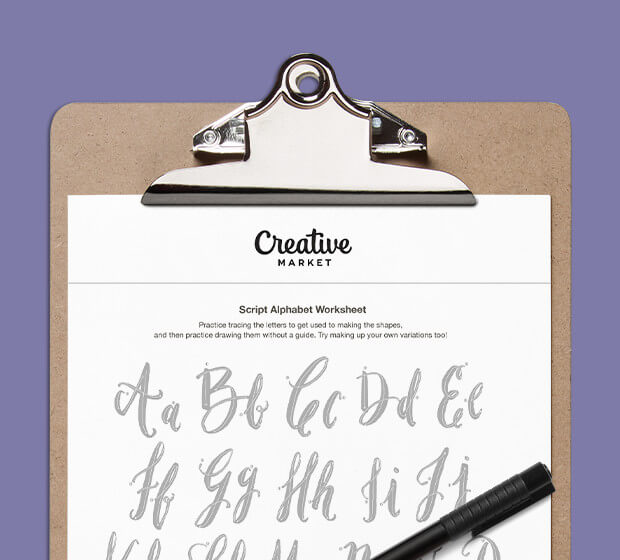
Download these worksheets and start practicing with simple instructions and tracing exercises.
Download now!