



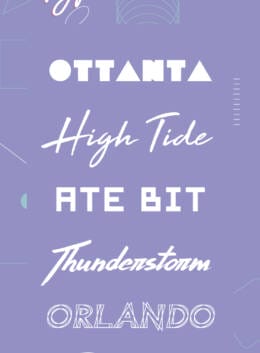
Ask anybody about the 80’s and you’ll have a variety of reactions. Some will tell you that it was loud and overly dramatic, while others will use the terms tacky and absurd. Truth be told, the 1980’s were definitely not for the faint-hearted. Especially when it comes to design, this decade was an explosion of eclectic and unique ideas that could leave your senses overwhelmed – and these fonts alone are enough proof of that.
What’s the big deal about the 80’s and its nostalgic feeling?
Well, the 80’s was definitely an expressive era, especially in terms of music, art, fashion, and design, and 1980s typography shifted toward experimental, personality-driven styles. People were beginning to embrace color and form, with bold, geometric letterforms often paired with neon gradients and chrome effects, no matter how eccentric or wild they may be. It was a maximalist decade in design, shaped by high-tech optimism and punk rebellion. This postmodern maximalism pushed back against rigid modernist minimalism through layered geometric type and neon-heavy visuals. This is probably why a lot of designers still use the 80’s as an inspiration in their designs, since these visuals can feel nostalgic and stir sentimental memories, a certain feeling, and even longing for the past. Some opt to capture the wildness of the era and go all out across all elements. As for the others, they discreetly add an 80’s element or two here and there, allowing them to blend perfectly with other tamer design highlights. If you’re on the lookout for fonts from the 80’s, these are ideal options. Each font captures a different element from that era, so you should be able to find at least one on this list that fits the vision you have for your design.
1. Blanch Sage
Blanch Sage brings a fun, polished take on retro typography, pairing a distinctive serif style with a softer, more elegant feel. Its alternates and ligatures give you plenty of room to customize headlines and lettering. Try this modern retro font for logos, invitations, magazine mastheads, branding, or designs that need a touch of vintage personality.
2. Limited Edition
Limited Edition gives you three ways to build a vintage typographic look: solid, outline, and shadow styles that can be layered together. The playful ligatures add another layer of character, making this retro font especially useful for logos, posters, stickers, apparel, social graphics, and nostalgic branding.
3. Advercase
Advercase takes its cues from vintage advertising and the personal-computer graphics of the 1980s and ’90s. This elegant retro serif is based on Apple’s Garamond adaptation, giving it a more refined side than some of the louder 80s typefaces. Use it for editorial layouts, posters, web graphics, branding, and nostalgic technology-inspired designs.
4. Modern Retro Font Bundle
If one retro font isn’t enough, this collection brings together 25 font families with a distinctly modern-groovy feel. The range makes it useful for experimenting with different sides of vintage typography, from chunky headlines and playful branding to packaging, magazine covers, posters, and T-shirt designs.
5. Mellow
Mellow has an easy, handwritten charm that feels like a note from someone you know. Its relaxed letterforms bring a little warmth and personality to logos, packaging, invitations, social graphics, and quotes. For designs chasing a softer kind of nostalgia, this handwritten font captures that familiar, feel-good quality without looking overly polished.
6. Overglow
For a more unmistakable 80s direction, Overglow leans into the synthwave and vaporwave aesthetic. Its script styling is made for the neon-soaked side of retro design, making it a natural fit for titles, logotypes, posters, album artwork, and digital graphics inspired by the era of arcade screens, glowing grids, and late-night city lights.
7. TAN
TAN takes a quieter approach to retro typography. This classic serif has tight kerning and enough character to work as a standalone typeface, while also pairing neatly with more expressive display fonts. It’s a useful choice for editorial layouts, branding, headlines, packaging, and vintage-inspired designs where you want the nostalgia to stay understated.
8. Tunnel
Tunnel is all about making the headline impossible to miss. Its chunky letterforms, smooth curves, and solid proportions give this bold display font a playful but confident presence. It works particularly well for posters, packaging, branding, editorial headlines, social graphics, and other projects where a strong retro-inspired title needs to take up some space.
9. Soul Wave
Soul Wave has the kind of wavy lettering that immediately brings retro design to mind. This groovy display font bends and flows across the page, making it a fun option for logotypes, stickers, packaging, posters, apparel, magazines, and social graphics. If your 80s-inspired project needs a little more movement, Soul Wave has plenty of it.
10. Morne
Morne goes big with a wide, heavy display style that feels right at home in bold retro layouts. Alongside its main characters, it includes three alternatives for every letter and number, giving you plenty of ways to change up the look. Use it for oversized headlines, posters, logos, branding, and chunky 80s-inspired typography.
11. Peach Sangria Font Duo
Peach Sangria pairs an elegant, flowing script with a chunky serif designed to complement it. The contrast makes the duo particularly useful when you need a retro headline and supporting type to work together without looking too uniform. Try it for vintage logos, display lettering, posters, packaging, invitations, and nostalgic branding with a more polished finish.
12. Teenage Garde
Teenage Garde takes retro typography in a cleaner, more structured direction. Strong lines, sharp edges, and a confident display style give it plenty of presence without relying on decorative flourishes. The family includes Regular and Extrude styles, making it a versatile choice for logos, advertising, posters, website headers, and bold brand identities.
13. Hello Radio
Hello Radio has a hand-drawn quality that keeps its vintage monoline script from feeling too polished. Slightly imperfect letterforms give it a natural, quirky character, while ligatures and multilingual support add flexibility. It’s particularly well suited to retro logos, labels, packaging, T-shirts, and lettering that wants to feel like it came from an old sign or radio station.
14. Orange Squash
Orange Squash brings a playful edge to vintage serif typography, with chunky serifs and rounded curves that give headlines plenty of personality. It’s a strong option for designers looking beyond the usual geometric 80s fonts and wanting something warmer and more nostalgic. Use it across packaging, advertising, logos, editorial layouts, and bold display work.
15. Naterium
Naterium sits between vintage lettering and a cleaner contemporary script, making it an easy fit for retro-modern projects. Alternatives and ligatures give the letterforms extra flexibility, whether you’re building a logo, quote graphic, blog header, magazine layout, or branding system. It’s a good pick when you want nostalgia without making the design feel stuck in the past.
16. Fat Kat
Fat Kat mixes bold serif shapes with a wavy treatment that gives familiar letterforms a distinctly retro twist. Its capital-letter ligatures can be used to create more unusual, flowing combinations, making the typeface especially fun for display work. Think logos, posters, packaging, apparel, and other designs that could use a chunky dose of vintage character.
17. Rushton
Rushton is built around the feel of vintage lettering, with alternate characters and swashes that let you add more personality to individual words. Its uppercase, lowercase, multilingual characters, numbers, and punctuation make it flexible enough for larger projects, too. Try it on retro logos, packaging, posters, apparel, signage, and nostalgic brand identities.
18. Crimson Cherry Bold Typeface
Crimson Cherry keeps things bold and relatively simple, using tight kerning and carefully drawn letterforms to create a strong retro display style. Its lettering has enough of a script influence to soften the heavier shapes, making it useful across posters, fashion and apparel graphics, logos, invitations, blog headers, and branding.
19. TAN – KULTURE
TAN – KULTURE is a bold display typeface with tight kerning and a straightforward construction that gives it a strong retro presence. It’s less about decorative effects and more about getting the proportions and spacing right, making it a useful choice for headlines, logos, posters, packaging, and other projects looking for a clean vintage feel.
20. The Awesome Serif Family
With 32 fonts in the family, The Awesome Serif gives designers plenty of room to explore different weights and treatments within a classic serif framework. It’s a useful larger family to have on hand for projects that need consistency across headlines, supporting text, branding, editorial layouts, packaging, and vintage-inspired typography.
The best 80s font depends on the mood you’re after. Bold display typefaces work well for posters and headlines, while retro scripts, serif fonts, and geometric styles can create softer or more sophisticated nostalgic designs.
Start with an 80s-inspired typeface, then consider adding era-specific colors, gradients, shadows, geometric shapes, grain, or neon effects. Music, fashion, advertising, arcade graphics, and early computer design are also useful sources of inspiration.
Popular 80s typography styles include bold display fonts, retro serif fonts, geometric typefaces, handwritten scripts, wavy lettering, neon-inspired fonts, synthwave typography, and styles influenced by arcade and early computer graphics.
Bold display fonts, chunky serifs, wavy retro typefaces, and expressive scripts can all work well for an 80s poster. Look for fonts with strong silhouettes and distinctive details that can hold their own at large sizes.
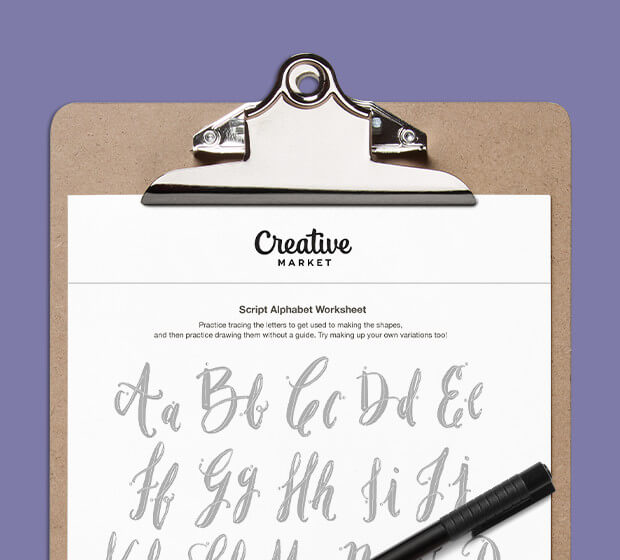
Download these worksheets and start practicing with simple instructions and tracing exercises.
Download now!






We create fonts, graphics, and produce aesthetically pleasing photos.
View More Posts



4 Comments