
Featuring No Gravity Illustrations by Craftwork




Taking notes digitally in 2024 is easier than ever. There are plenty of feature-packed apps that give you some smart ways to make and keep track of your important and not-so-important notes, but which note-taking apps stand out above the rest and have those extra features that make them perfect for creatives to use?
In other words – what are the best note-taking apps you can find today? To answer that question, we need to look at all the features of a collection of apps that each claim to be able to handle your note-taking needs. What are their strengths? What are their weaknesses? Can they handle all your notes – from that cute note you take when you’re not really thinking to in-depth lecture notes?
Those are the questions we’ll answer here as we take a look at 11 beautifully designed note-taking apps that have some unique, visual note-taking features that are ideal for creatives.
Dropbox Paper
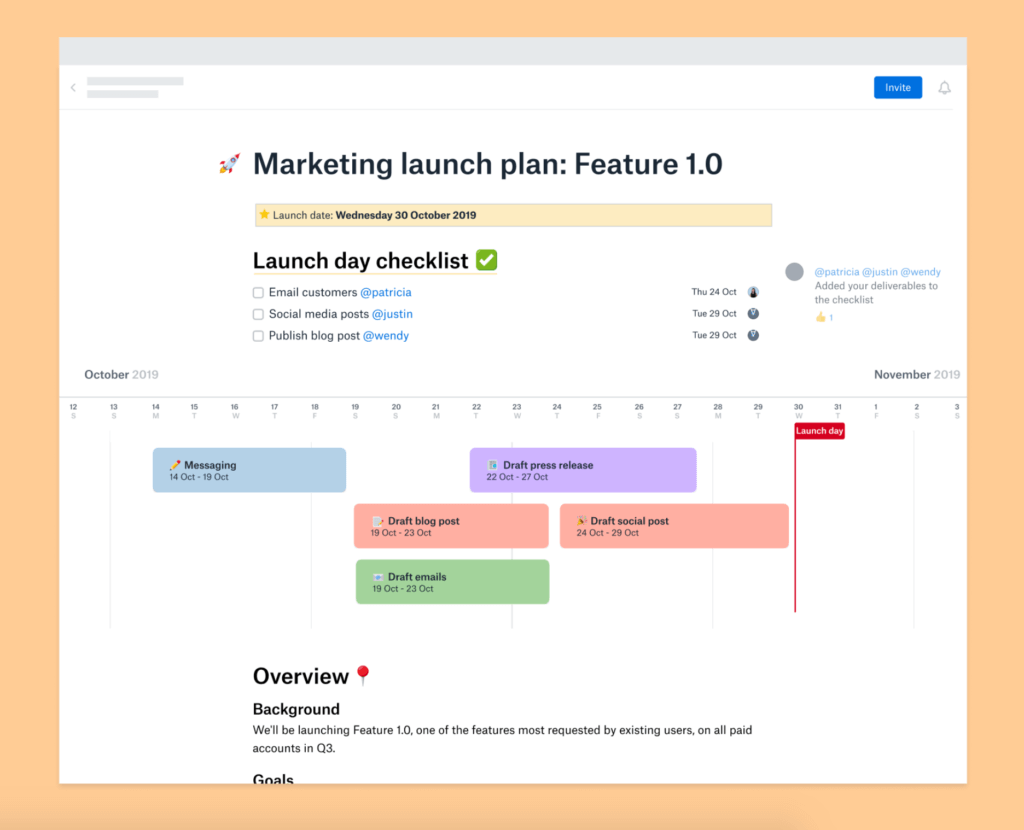
You probably know Dropbox as the cloud storage company, but they also create some neat productivity apps with one of the most useful being Dropbox Paper.
Paper has a number of features that make it very versatile for a number of uses, but for creatives it makes a great visual note-taking app as it has rich media integrations, meaning that you can ‘embed’ images, videos, sounds, and links directly into your documents and you’ll be able to play and interact with them directly. Of course, all of that goes along with the simple digital notes – which are text-based – that you can take alongside all of those advanced features.
And there’s more.
With Dropbox Paper, you can also insert charts, timelines, and even create a to-do list. Another cool aspect is that team collaboration is also an option. Paper gives you a few simple formatting options, just enough to give you control over your note-taking without overwhelming you with too much.
Dropbox Paper can be accessed via any web browser. Some native mobile apps are also available as an option for iPad, iPhone, and Android. Your documents will be synced across all devices as they are stored in the cloud. Paper comes free with any premium Dropbox account.
Price
Included with Dropbox premium plans
Strengths
- Rich media integration/embeds
- Collaboration
- Simple UI
- Cross-platform support
- Easy web app access
- Great for longer thoughts and ideas
Weaknesses
The only real weakness for Paper is that it’s an online-only tool. If you lose your connection to the web, you also lose the notes you’ve taken. That can be frustrating for somebody who has an important to-do list built in Paper when they suddenly find they can’t access the list at all.
Milanote
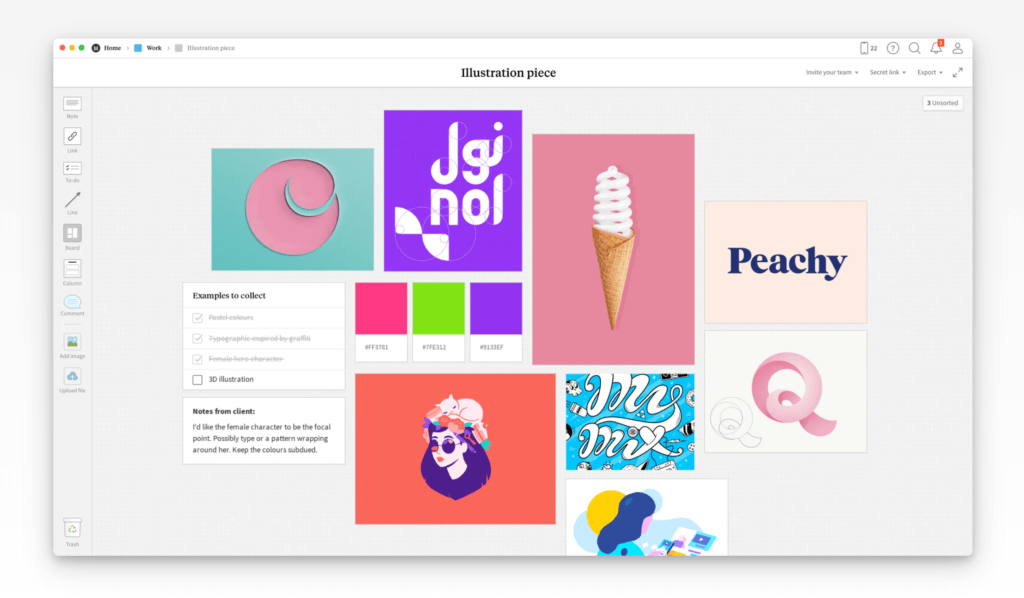
Milanote is all about organizing your content visually. This app, more than any other on this list today, keeps the focus strongly on collecting and displaying visual content and notes in a very familiar and highly customizable way.
Milanote gives you a canvas to add any kind of content you want, so you are not restricted to the usual ‘document’ or ‘card’ setup. You are free to design each new note in whatever way you need to fit the project or task at hand.
So, you can easily put together a kind of free-form scrapbook or mood board, or something more structured and rigid. Essentially you get the creative freedom to piece together content and ideas however you need, but you don’t lose any of the organizational tools that allow you to find those notes at a future date.
The Templates Gallery gives you a fantastic idea of just what might be possible with Milanote. You can even have the option to populate your notes or moodboards with free images from Unsplash if you don’t already have your images at hand.
Price
You get a free note-taking app for up to 100 notes, after which you have to subscribe to one of the unlimited plans from $9.99/month.
Strengths
- Canvas style layout allows for creative freedom
- Many beautiful templates available
- Flexible for different use cases
- Live collaboration & feedback
Weaknesses
The cost is a real drawback for Milanote, as you have to pay a pretty hefty fee once you’ve used up your quota of 100 notes.
It could also use a little more structure – there’s no tree structure built in for the notes so you could find yourself fruitlessly searching for notes you created a couple of months ago.
Notion
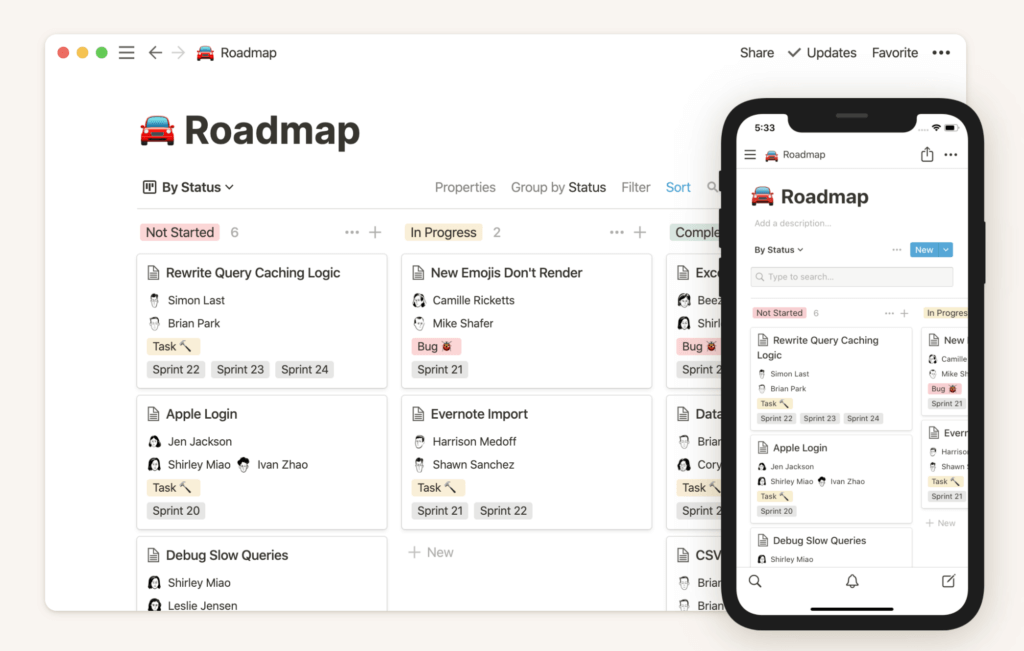
Notion is a very popular choice for note-taking apps right now. At first glance, it might seem like a standard word processor or note-taking app, but it can do a whole lot more. Notion can be used to build a wiki, track expenses, create a timeline, build a website, or manage your projects alone or with a team. Notion has impressive support for embedding content from over 500 popular apps.
Notion has a great guides section which will help familiarize you with all the advanced things you can do with Notion. Still, as powerful as it is, that doesn’t take away from the fact that if you want to use it as a simple note-taking app, you can. The beauty of Notion is that it has some great customization options. Embedding content is a breeze. You can make notes visually interesting with ease.
The interface is clean and minimal, and native apps are available for all mobile and desktop operating systems, or you can simply fire up Notion in any web browser. Best of all, it is completely free for Personal use — with affordable professional plans available for as little as $4/month.
Price
The free version of Notion should be more than enough to give you a cute notepad you can use to organize notes.
Strengths
- Powerful & Advanced Features
- Embed content from 500 top apps
- Organize visually
- Supports multiple media formats
- Text Formatting
- Multi-functional
- Synced across all devices
- Highly collaborative for teams
- Templates available
- Easy to tag and search content
Weaknesses
There’s a definite learning curve to Notion that may not be appealing to people who just want to take notes quickly. It’s largely designed for the powerful user who wants to maximize all of its features. That’s the catch 22 of any app that has such a rich feature set – you’ll always have to spend time learning how to use all of them!
Goodnotes

Goodnotes redefines the way creative professionals capture and organize their thoughts by blending intuitive design with the practicality of digital tools. The app’s standout feature is its digital ink technology that replicates the fluidity and precision of traditional writing, making it a favorite for artists and designers alike. It excels in transforming scattered ideas into neatly organized digital notebooks, easily accessible across various devices, ensuring that your work travels with you.
Strengths
- Flawless device synchronization
- Simple gesture controls
- Wide range of templates
- Precision digital ink technology
- Powerful search features
- Effective document organization
- Diverse exporting capabilities
Weakness
- Lacks extensive third-party integrations.
Price
- Available in a free tier; additional features are accessible through paid upgrades.
Walling
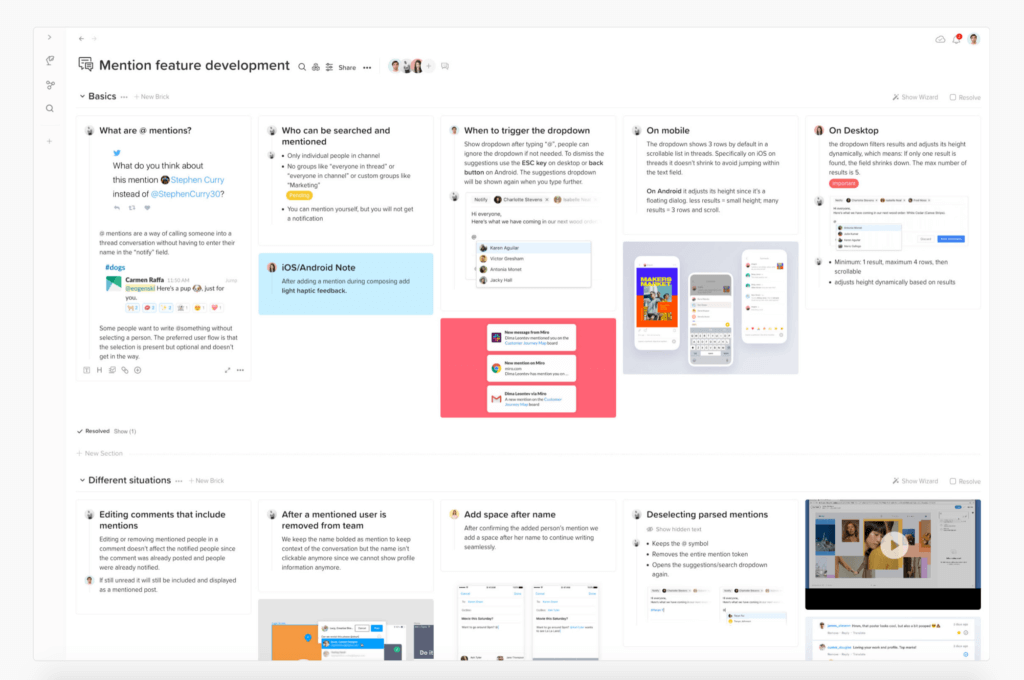
Walling is a new player in the game, having only just launched in 2019. Since then, it’s done a great job of making itself known. It comes with it’s added an impressive array of features, focusing on visual note-taking. In their own words, Walling is “the most visual and frictionless experience for teams and professionals to manage projects, organize ideas, and stay on top of everything.”
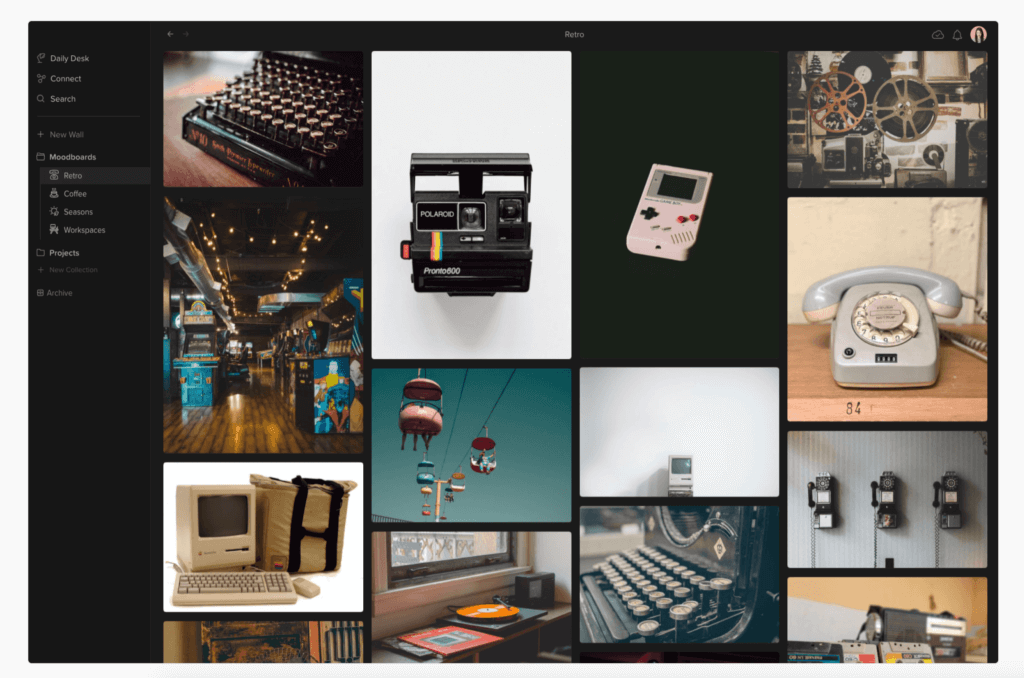
The app is available across all platforms and via the web. There’s also a wide selection of Templates available that showcase just how many types of documents you can create. Here’s an example of a mood board that can be made with Walling (below), and it shows just how useful this app could be as more of a visual space for you to collect and organize your creative notes and ideas.
Price
Free plans available. $5/month for Premium. This is definitely one of the more affordable note-taking apps out there.
Strengths
- Great for visual notes and ideas
- Beautiful UI
- Powerful additional features
- Works across all platforms
- Great templates available
- Support for collaboration
Weaknesses
Walling’s interesting wall-based structure mirrors Pinterest in some ways. While that may great for some – especially the visually-minded – it can make organizing standard notes a bit of a hassle for those who just want something simpler.
Evernote
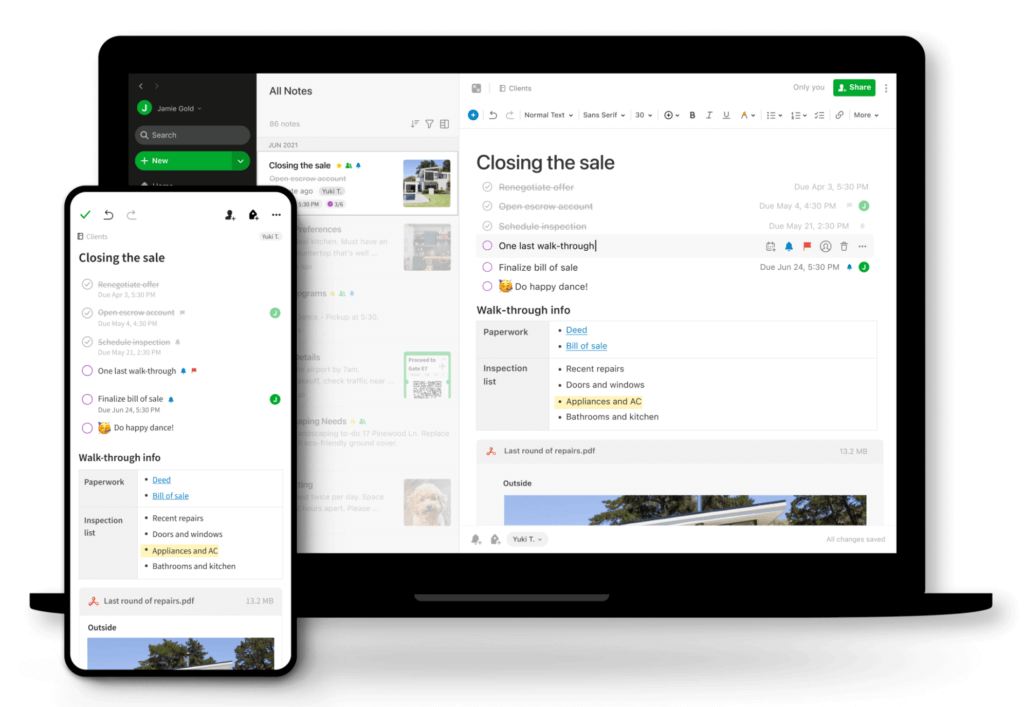
Evernote is probably one of the more well-known options in this list. The unforgettable green elephant icon is very recognizable and has been around for a little over a decade now. Launched in 2008, Evernote has been one of the go-to note-taking apps for creatives and professionals ever since.
It comes packed with all kinds of features that make it easy to manage your time, projects, and tasks. You can customize your content with text formatting and embeds (including Google Drive, Slack, Outlook, MS Teams, Zapier, and Gmail.)
One of the standout features for Evernote is its ability to clip content from the web. The excellent web clipper allows you to use a browser extension to grab an article or web page and capture it in a number of ways; you can choose to simply bookmark it, grab a screenshot and annotate it, simplify the page and eliminate advertisements, etc., or even capture a summary of the page itself to cut down on reading time.
This makes Evernote a great option for creatives looking to gather content from around the web for research and inspiration.
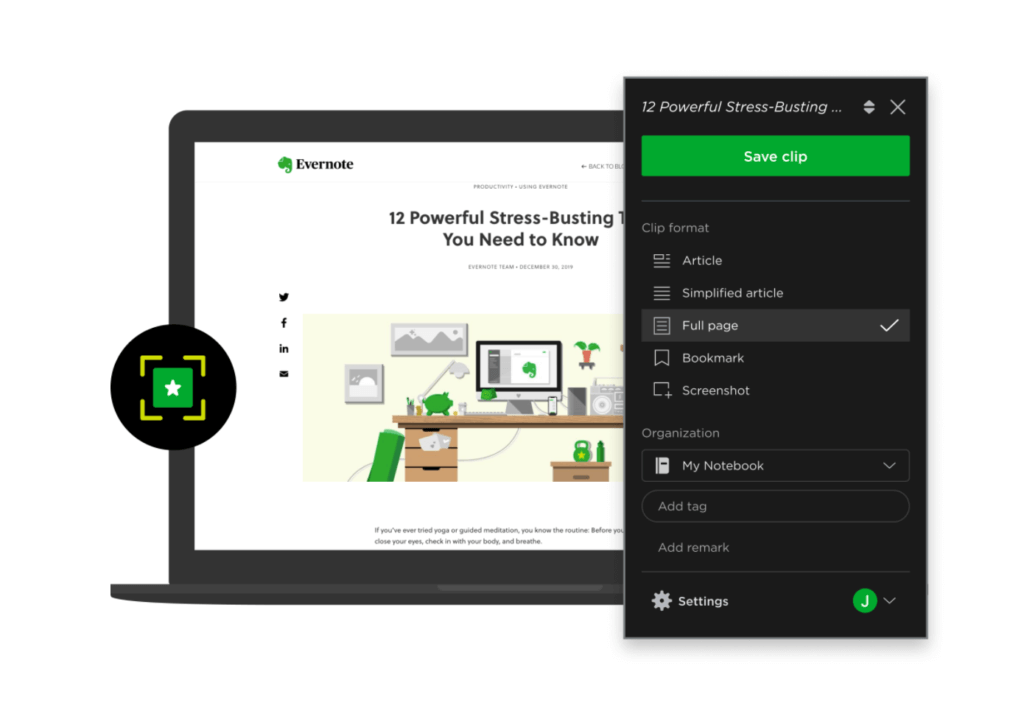
Evernote’s document scan feature is another neat addition for creatives that will allow you to quickly upload handwritten notes and sketches. This makes it a great way to keep paper-based notes and ideas organized. Handwriting applications are pretty useful so it’s a good idea to know that this option is out there. You can find the app in all popular app stores, and it is available on all platforms, Mac, Windows, iOS, Android, and the Web.
Price
Free Trail available. Premium options from $7.99/month.
Strengths
- Web Clipper Feature is very unique and well-executed
- Easy to Search clips and handwritten notes
- Synced via the cloud
- Text Formatting
- Image and media imports/uploads
- Native apps available for all platforms
- Large community of users
Weaknesses
Evernote has started trying to build AI features into its app, which aren’t especially well-implemented and could lead to you just wasting time. The user experience needs some work on that front. It’s also an expensive tool, with the free trial barely giving you a taste of what it has to offer.
Craft
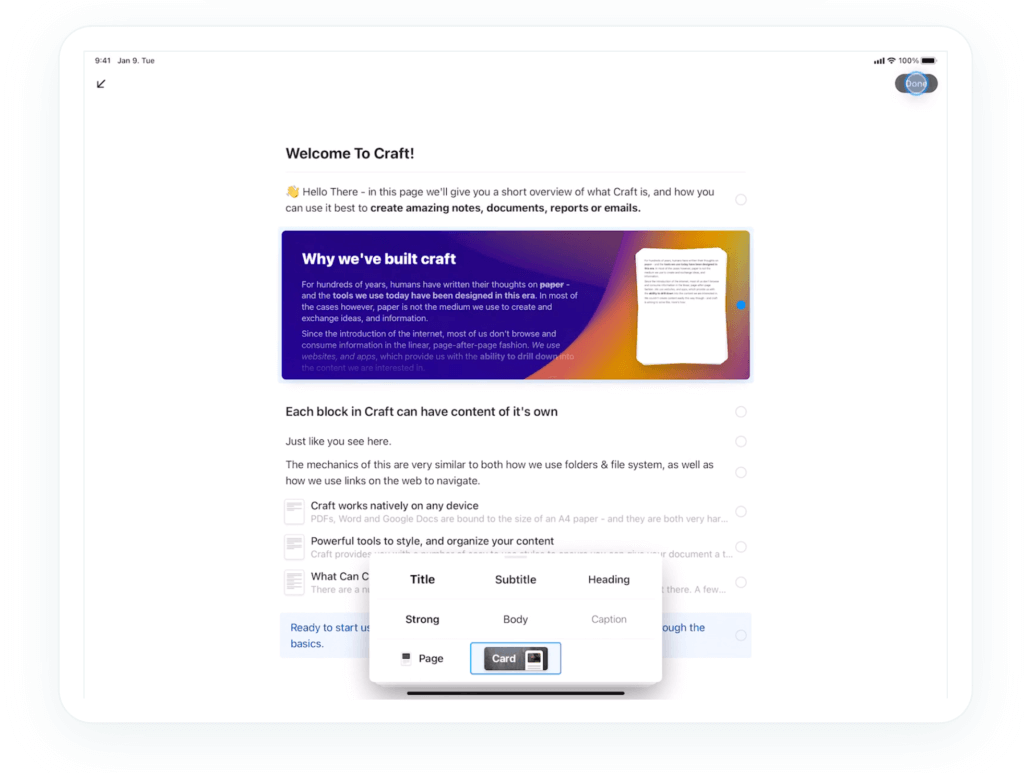
Craft is another new addition in this space, but this one is built specifically for Apple devices to give it a more intuitive feel. The Mac and iOS apps give a fast, seamless experience across multiple devices that make full use of Apple’s built-in system features — but a web app is also available too if you access craft via a browser.
Craft is beautifully designed, and it allows for some tasteful adjustments to your written content. The useful export feature allows you to save your docs and share them in more common formats such as MS-Word Docs.
Craft allows you to organize content visually with pre-designed pages, groups, and beautiful note cards, Plus, there are some great styling options available. While the solo experience seems to be the main focus of this app, there is still the option to collaborate.
Price
Free for personal use. Pro option available from $44/year.
Strengths
- Fast and functional apps
- Beautifully simple UI
- Visual organization tools
- Copy & Paste across apps works well
- Powerful Export feature
Weaknesses
The customization aspects of Craft are a touch limited compared to other Apple-based note taking apps, such as Apple’s own Notes app. Then, there’s the Apple exclusivity – Android users are locked out of giving this app a try.
OneNote
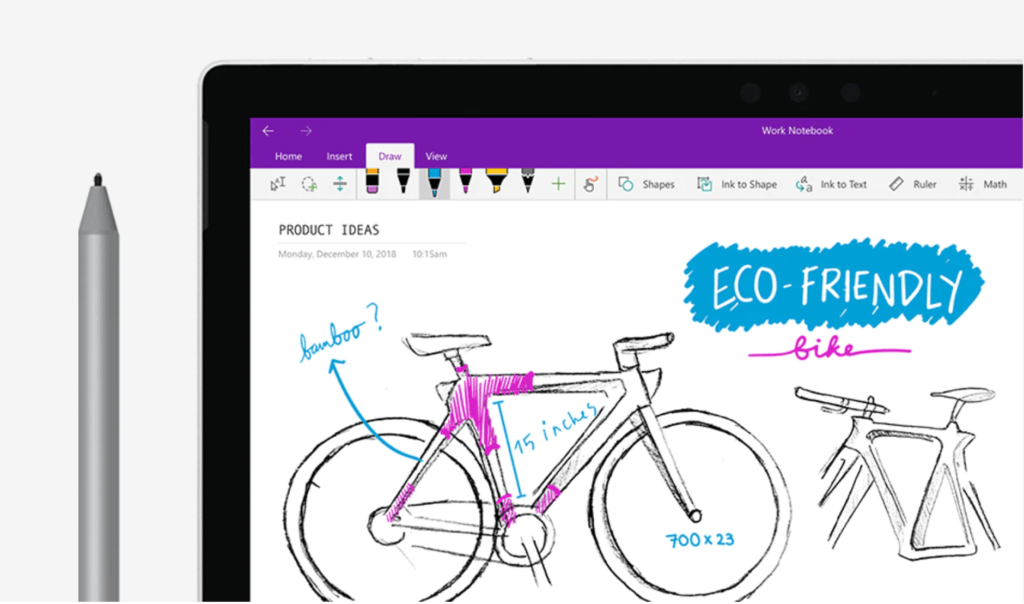
OneNote from Microsoft comes as part of any Microsoft 365 subscription, so using the app on a Desktop requires a subscription, but there are free mobile versions available for iOS and Android (from what I can tell).
The app has been around in one form or another for almost a decade now, but it has had several redesigns over time and based on the users’ reviews alone, people seem to be very happy with how it has turned out. Even on the App Store with users who might sit on the other side of the Apple vs. Microsoft divide, you can see strong reviews of 4.6 out of 5, so they really must be doing something right.
The app features all the basic note-taking features you might expect, but it also packs in ‘Ink’ features which allow you to add sketch annotations and even convert written notes to text which allows you to make quick, scrappy notes with a stylus (or your finger) and save them later in a way that is neater and easier to search.

The much-loved clipper feature from Evernote is also present here, allowing you to capture and organize content from around the web and even pull simplified and summarised content from pages and articles as you go.
Price
Free for Mobile. Subscription may be required for Desktop versions.
Strengths
- Convert handwritten notes to text
- Great annotation functions (with animated re-play option)
- Easy to Organize & Search content
Weaknesses
The app is a little laggy at times, which can be really annoying when you’re trying to make handwritten notes. Plus, anyone who doesn’t already use the Microsoft suite faces a bit of a learning curve in terms of adjusting to how the app works.
SuperNotes
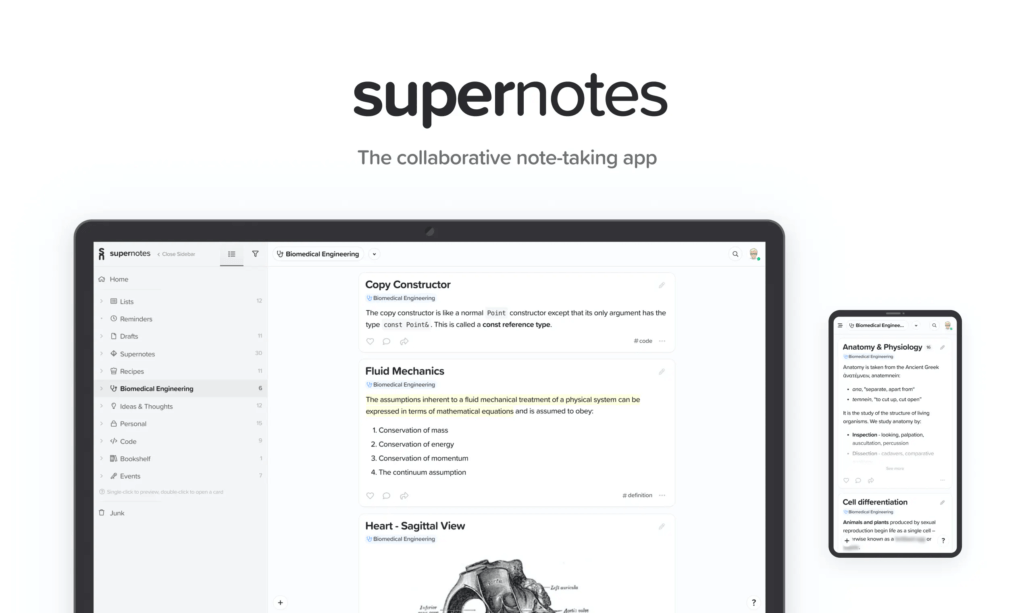
Supernotes launched last year and it is “a new approach to note-taking where everything is a markdown (note) card that can be combined and connected to make an amazing knowledge base. And because everything is a card, you can share bits and pieces with your friends, without being forced to share everything in one go.”
There is a strong focus on these flashcards as the app was built with students in mind and a 50% student discount is available right now. This is great for organizing snippets of information that you want to either remember or share.
These cards will sync across all your devices, so if this approach to note-taking is something you prefer, SuperNotes could be for you. Organize your category of notes as you choose. Additionally, the search function is a major advantage. Not only are cards searchable, but you can even export them into different formats such as PDF or markdown.
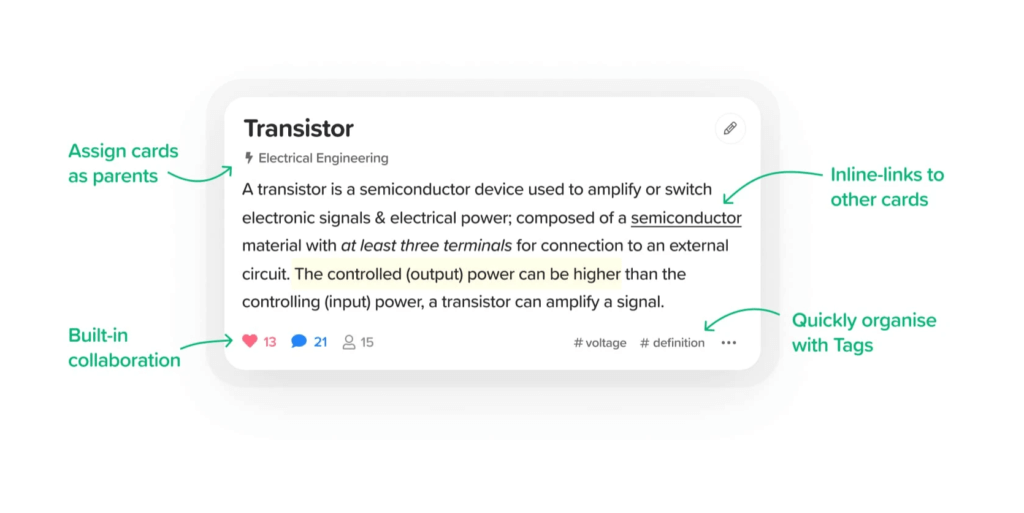
Design-wise, it looks fantastic and even comes with a dark mode option. Available for free for up to 40 cards, you can also unlock unlimited cards for around $8/month. Cards can be color-coded too to help to make them stand out or to help keep them organized.
The Supernotes apps are made for desktops only (for now) — so Windows, Mac, and Linux systems are all supported while mobile support is coming soon. As with most of these tools, you can always just fire the app up via any web browser.
Price
Free for 40 cards, $8/month for unlimited.
Strengths
- Flashcard-based notes
- Simple and clean UI
- Easy to share
- Easy to Export cards
Weaknesses
Some of the features – such as earning points for using the app – feel a little gimmicky and do more to distract from the app than they do to enhance it. Keep this in mind, all you power users, and don’t let it slow you down.
Google Keep

Google Keep is a somewhat ‘hidden’ gem that comes pre-installed on most Android phones already — but many people have likely never opened it up to explore what it actually is.
Visually the notes on the Google Keep app kind of resemble the look of colorful sticky notes, but these notes are a lot smarter than that as you can store documents, images, locations that will sync across all your devices and be searchable at any time, this makes it easy to just quickly snap something that you think you might need at a later date and easily find it when needed.
One of the most unique features of Keep when using the Keep Chrome App is the ability to drag text or graphics from your note app straight into other Google Docs.
All in all, Keep is perfect for smaller, scrappier notes without much in the way of text formatting or quickly moving images and documents from one device to another. Keep works on pretty much any Windows, Mac, iOS, and Android device or simply load it up anywhere in your web browser. The app is completely free to use.
Price
Free
Strengths
- Synced across all devices
- Supports multiple media formats
- Drag & Drop uploads
- Fast & easy to use
- Perfect for taking short notes or images at speed
Weaknesses
It would be nice to see a desktop version of this cute note-taking app, as well as a version that allows you to access your notes even when you’re offline. Currently, neither exists for Google Keep.
Slite
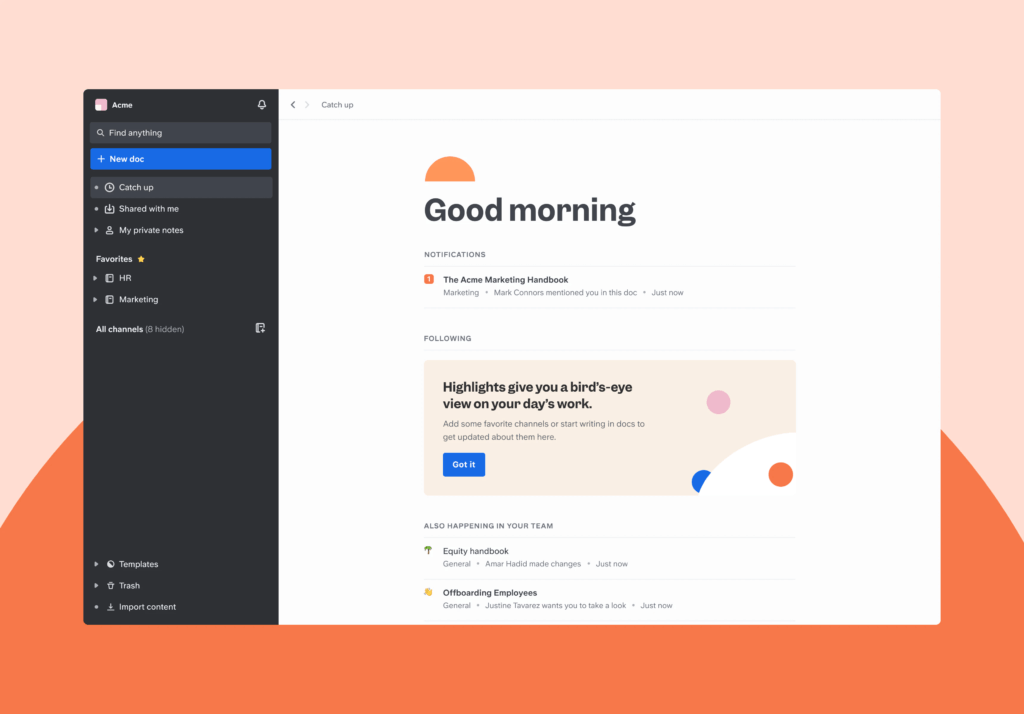
Slite is another strong note-taking option that can rival the likes of Notion and Dropbox Paper. With an impressive collection of pre-made templates fit for almost any purpose, it’s easy to see how versatile such a simple note-taking app can be.
Slite aims to be the perfect communication tool for remote teams, so collaboration is a big focus. Images, media, links, etc., can be embedded neatly, and Slite also gives you the ability to sketch out additional notes or diagrams.
A free plan is available, which allows for up to 50 docs, but unlimited docs are available for just over $6/month. This certainly seems less of a personal note-taking experience and more of one geared towards sharing and collaboration that takes it above and beyond a simple note-taking app if you so wish.
Slite is available on Mac, Windows, iOS, and Android devices. A web version is also accessible via your web browser if needed.
Price
Free or $6/month for Unlimited.
Strengths
- Focus on collaboration
- Lots of well-designed templates for multiple uses
- Export Notes to various formats
- Clean & Intuitive UI
Weaknesses
Though Slite excels in enabling project management with its note-taking features, there’s still no API for developers to use so they can adapt the app to their specific needs. It seems their approach to integrating custom tools is a little lacking.
Apple Notes App

Just so we’re all on the same page here, it’s important to make one thing clear with Apple Notes – it’s not available to everybody. Only those who have an Apple device – such as an iPhone or iPad – can access it, which is the main reason why it’s so far down this list.
Having said all of that, Apple users get the ability to take notes in almost any format with this app, from basic and quick notes through to detailed to-do lists that even include check marking features so you can literally tick of a completed task at the tap of a screen.
Then, you throw the Apple Pencil into the mix.
Take that pencil tool and combine it with an iPad and you suddenly have a blank page on which you can handwrite your thoughts, create funny little doodles, even create mind maps. That’s something that most other apps don’t offer, which makes Apple Notes stand alone as as one of the best aesthetic note taking apps.
Price
As long as you have an iOS device, you won’t have to pay a thing for Apple Notes. It’s built into your device and ready to use whenever you see fit. Unfortunately, those who don’t have an Apple device miss on out what may be the best app for allowing users to showcase their visual creativity.
Strengths
- Uses regular and smart folders for great organization
- Enables note grouping
- Automatically sorts notes by creation date
- One of the only cute note-taking apps to allow handwriting as well as typing
- Multiple view options
- Handy eraser mode for getting rid of mistakes
- Highlighter tool for emphasizing important notes

Weaknesses
The weakness here is obvious – if you’re not an Apple user, you don’t get to even try this app. That’s a shame because it’s so much more than a cute notes app thanks to its feature list.
FAQs About Note-Taking Apps
What makes the best note-taking app?
Every note-taking app is going to be a little different. The best-note taking app for you is the one that meets all your needs and checks all your boxes as far as criteria are concerned. If you’re looking for something super simple, the Apple Notes App could suffice. If you need advanced capabilities, Evernote or OneNote could be the way to go. Then again, if you need something that lets you collaborate with teams, Slite may be a solid option. The best thing to do is to look into the details, the pricing options, and how you plan to use the app.
Which note-taking app is best for teams and large groups?
Slite is going to be your best for remote collaboration and teamwork. It’s accessible via a variety of operating systems including Mac, Windows, iOS, and Android devices. A web version is also accessible via your web browser if needed.
Looking for something more legacy? Dropbox Paper could be it. Known as the standard in note-taking collaboration tools for as long as cloud-storage has been a thing, Dropbox makes it easy to sync notes across multiple devices and collaborators.
What features should you look for in note-taking apps?
Again, this all depends on how you plan to use the app. If you need design features, look into a design-focused note-taking app like Goodnotes or Craft. For something that operates a bit more like a word processor, Notion could be a great fit.
How much does a note-taking app cost?
This ranges from free to up up and beyond. Craft goes as high as $44 per month for the premium version. Additionally, some desktop versions come with an extra cost but their mobile versions are free.
What’s Your Favorite Note-Taking App?
So there we have it, 11 fantastic note-taking options that are out there and available in 2021, but we’d love to hear from you and know what apps you use to keep on top of your creative note-taking during a project or just while you are gathering important documents or inspiration?
Let us know in the comments below if you have any suggestions and maybe let us know which of these 10 above are your favorites!
Download these worksheets and start practicing with simple instructions and tracing exercises.
Download now!






Try some of my FREE goods: https://liammckay.lemonsqueezy.com - Designer with a love for beautiful Icons, Textures, Brushes and WordPress Themes.
View More Posts