



Sometimes during your creative career you’ll face the need to share ideas within a group setting. The problem is not collaboration. The problem is having you sit with a group of vicious idea hitmen to “figure it out”. There’s no way your best ideas are making it alive out of this session. We get it.
Social psychologist Irving Janis first coined the word “groupthink” back in 1971. He defined the term as “as a psychological drive for consensus at any cost that suppresses dissent and appraisal of alternatives in cohesive decision-making groups.” His first concern was that groupthink was preventing U.S. policy-makers from doing their job. While we may not be trying to run a country here, some of us have certainly felt the mind-boggling frustration of trying to decide within a group.
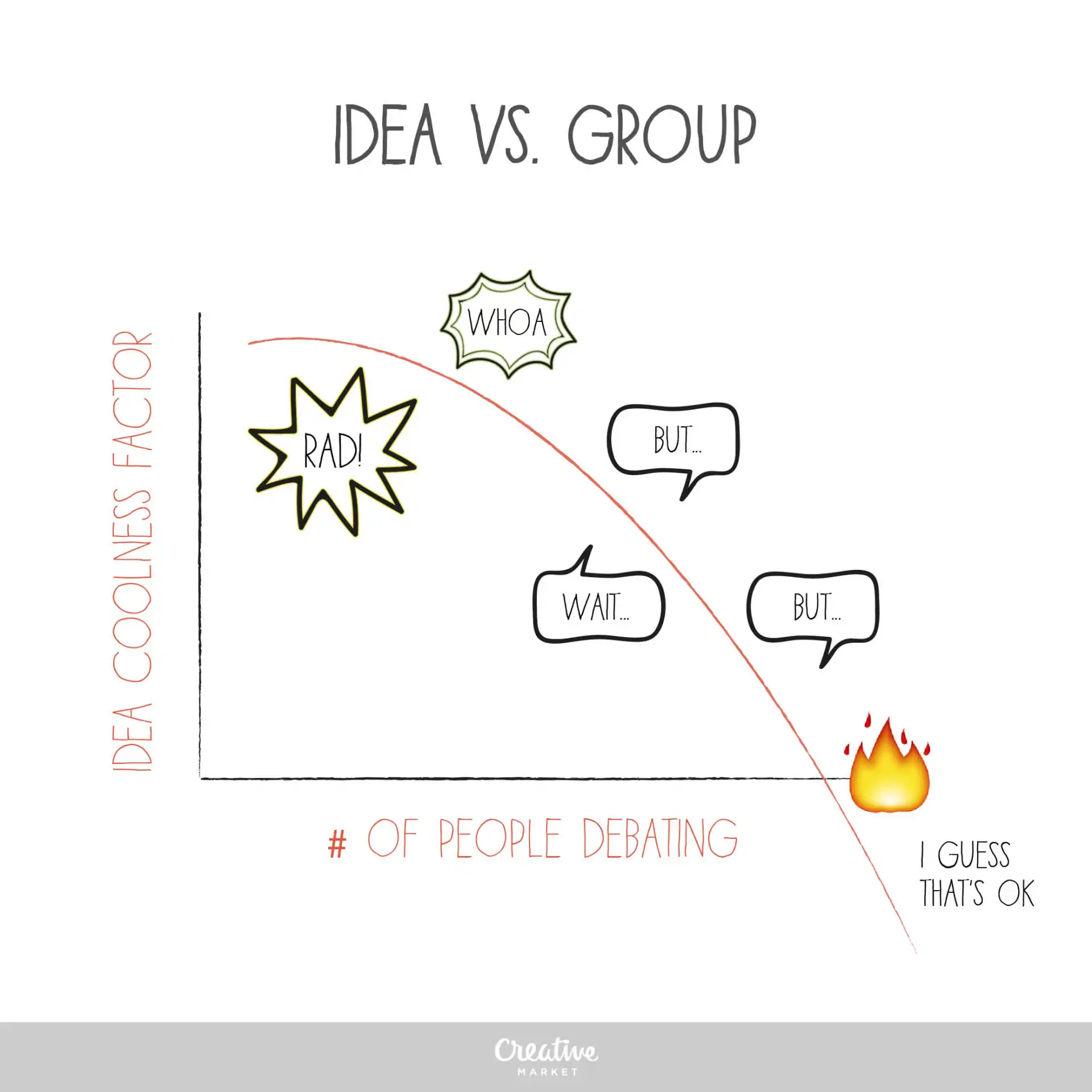
Beware: The 8 Symptoms of Groupthink
Janis went a step ahead and came up with a list of 8 conditions to determine that groupthink is indeed taking place. If you want to learn more, I’m adding a couple of great books on Groupthink theory at the end of this article. In the meantime, here’s the recap. As you read these symptoms, feel free to share the dangers with your people. Millions of brilliant ideas are dying as you read this:
We all become annoying cheerleaders – aka the “Illusion of Invulnerability”
With everyone jumping to the decision wagon and group dynamic, there’s an overarching sense of optimism that can hide what’s wrong/dangerous about many of our ideas.
Everyone else is wrong because we are right – aka “Collective Rationalization”
I mean, they’ve got to be wrong, right? “There’s no way 10 people can be wrong”. Oh yes, yes there is.
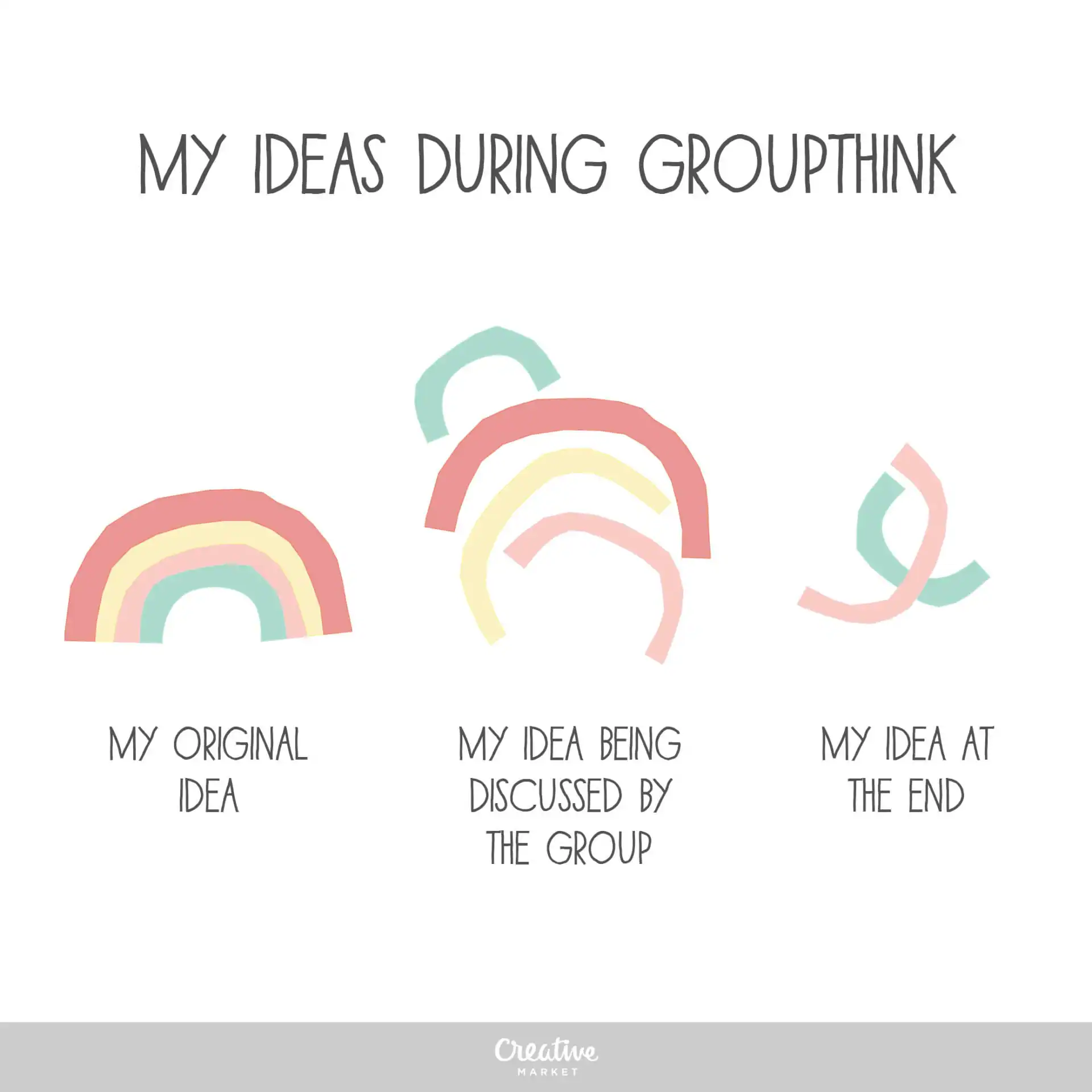
Everyone’s nodding, so this has got to be morally right – aka the “Illusion of Morality”
You’d be surprised at the kinds of horrible, ethically wicked things human beings have approved by committee. Scary, really.
You can’t sit with us – aka “Excessive Stereotyping”
Anyone outside the group does not exist, think or matter. Period, pretty much.
Kill whatever looks different – aka “Pressure for Conformity”
The meeting goes by smoothly, as long as everyone is thinking alike that is. But, in George Patton’s words, “if everyone is thinking alike, then somebody isn’t thinking.”
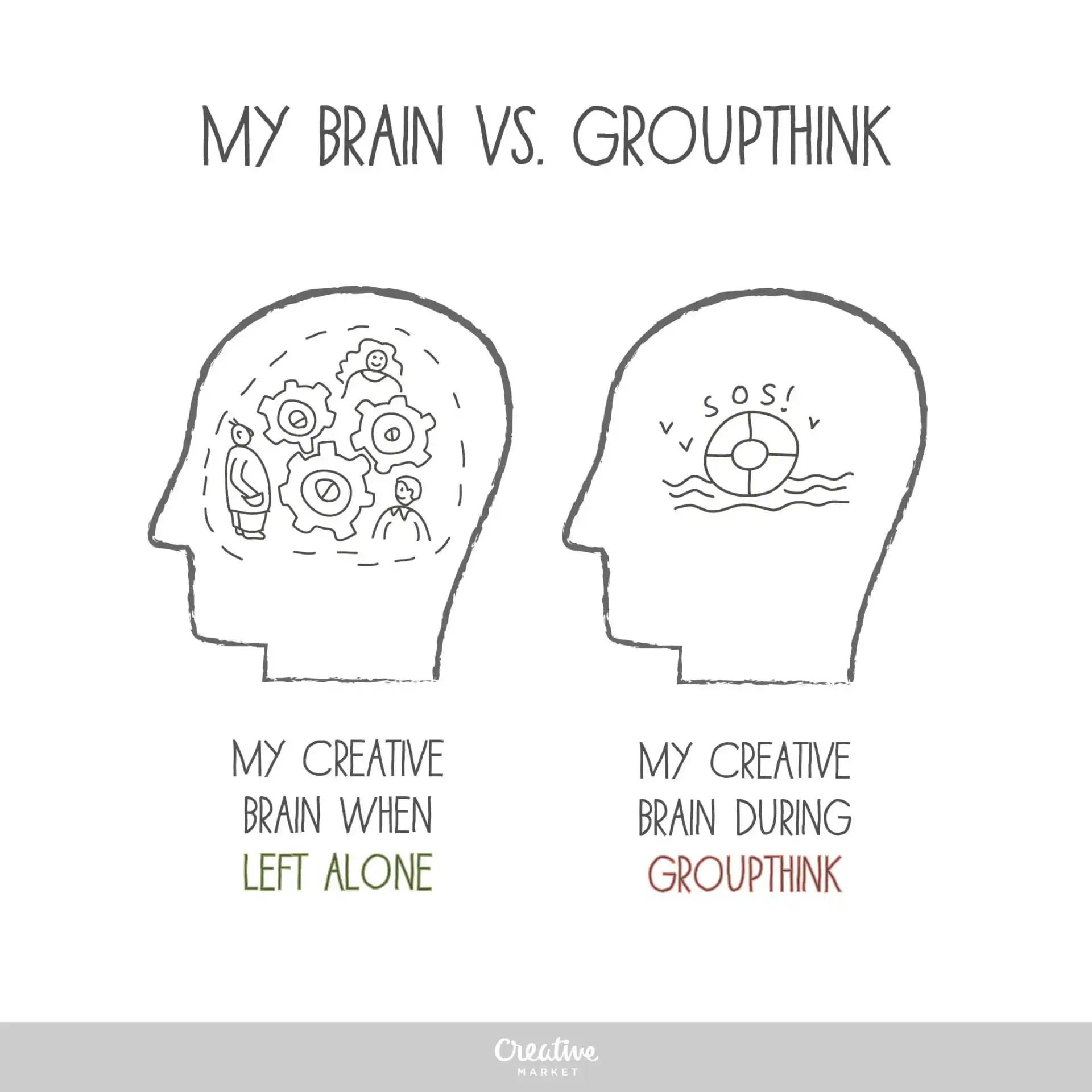
People are bullied into silence – aka “Self-Censorship”
Can we all agree that groups intimidate certain creative types? Can we agree that having them stay quiet is an utter disgrace? That we all lose? Good.
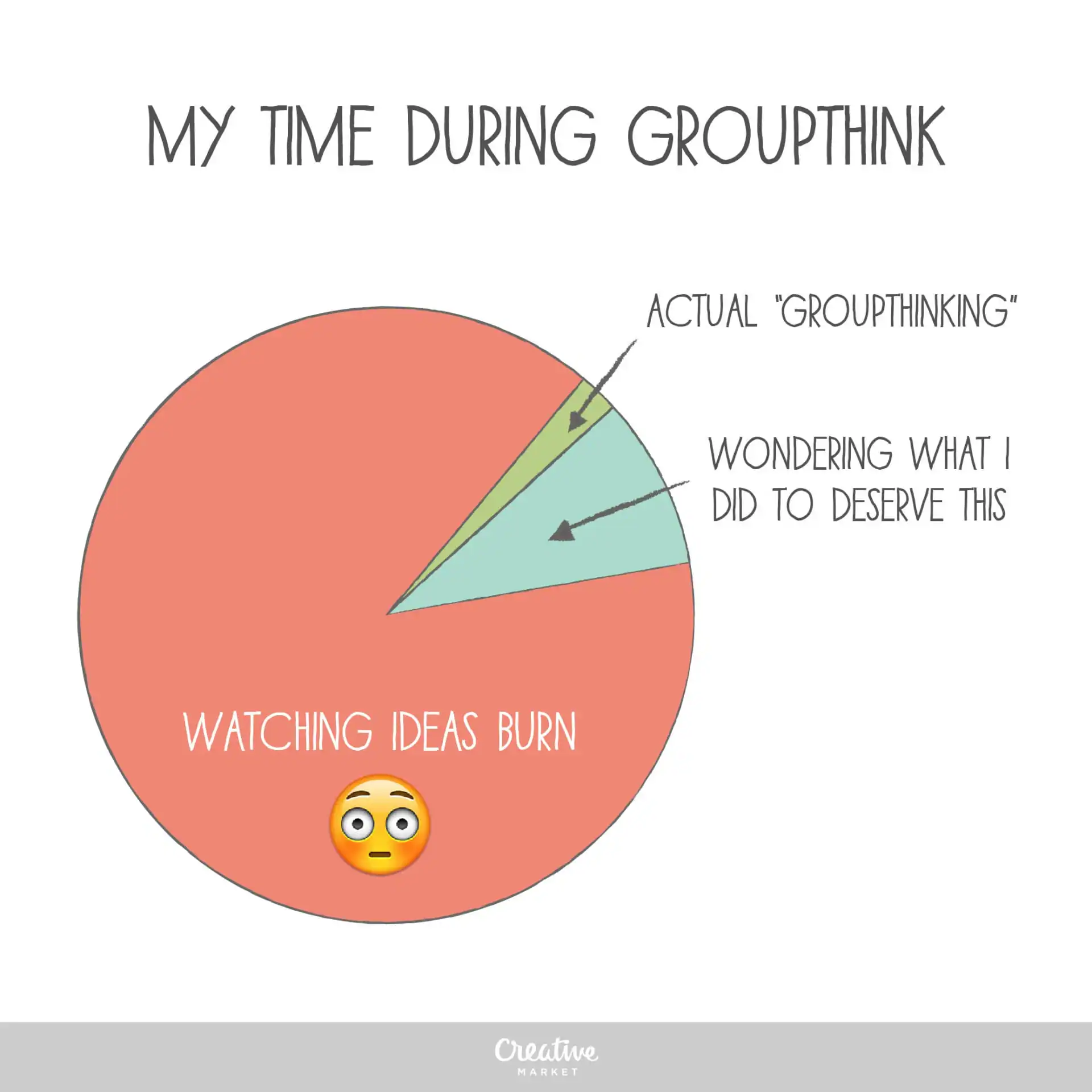
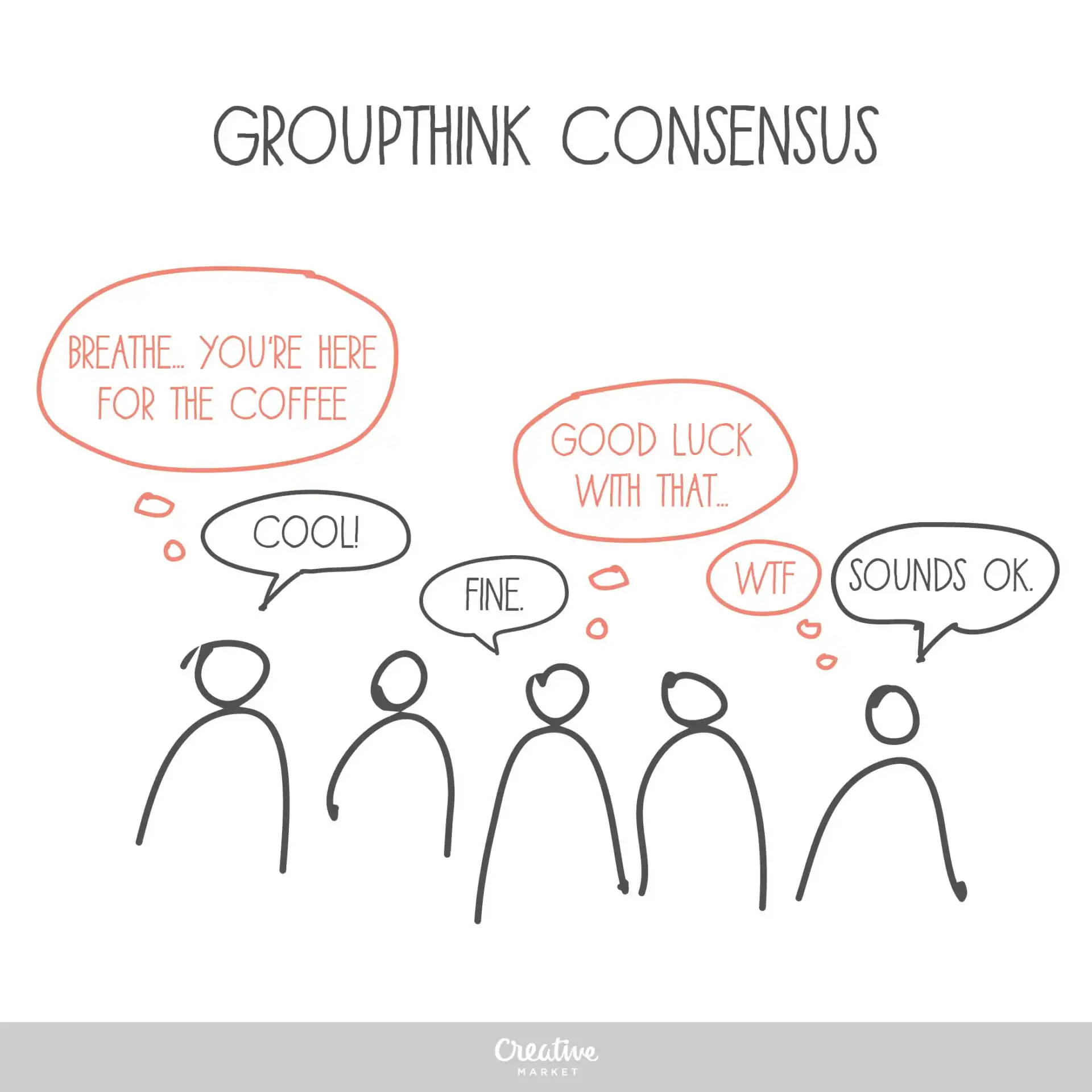
Glad we (dis)agree – aka the “Illusion of Unanimity”
This has happened to everyone at some point: the group “agrees” on a seemingly unanimous decision that no one is really passionate about.
Dealing with idea bosses – “Mindguards”
Naturally, members that are most comfortable with groupthink will gravitate towards positions of power and management. The rest, trying to inadvertently mute everything around them, will often yield their voice to the loudest members in the room. The drawback? They can be wrong, and take everyone else with them.
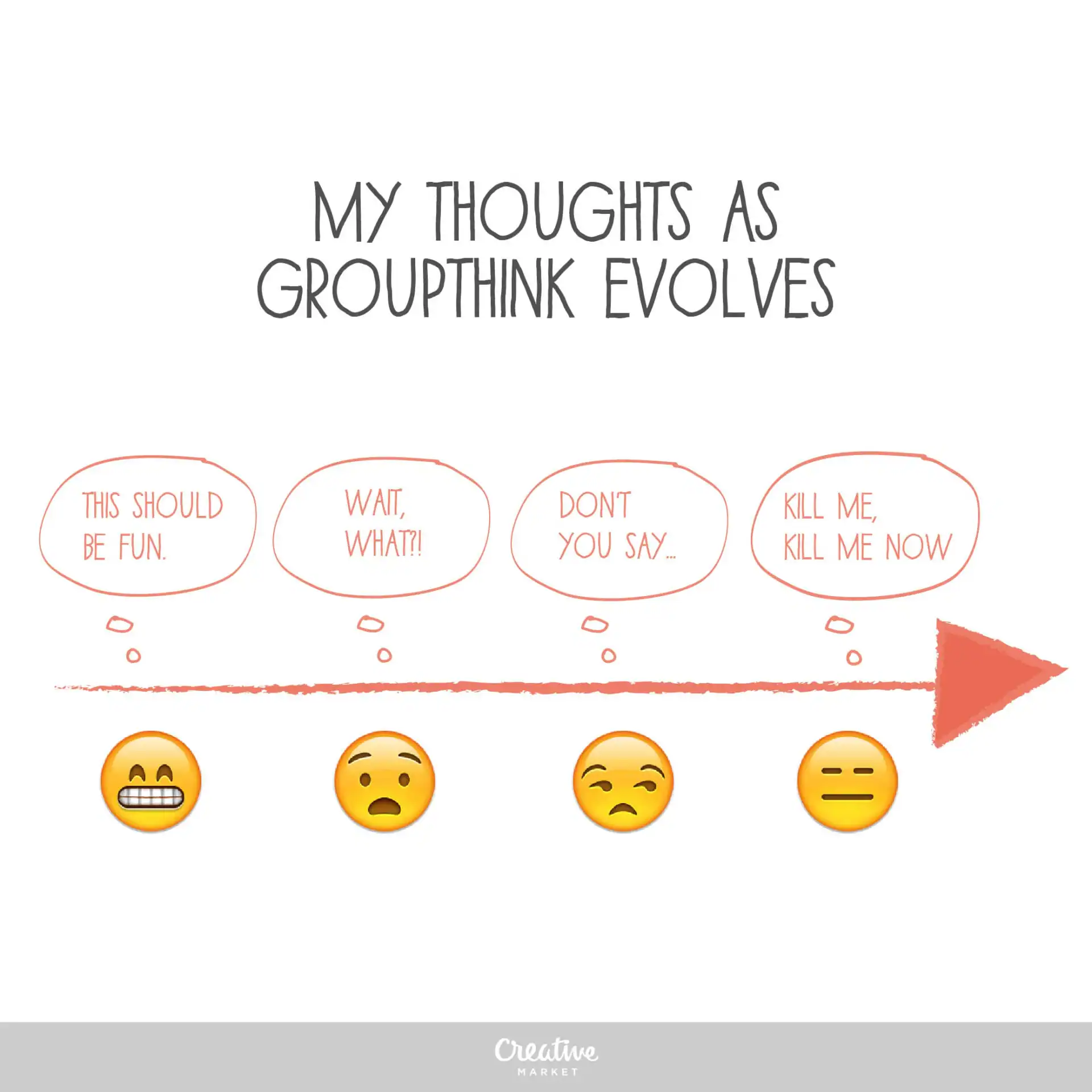
Your turn!
Has groupthink ever ruined any of your ideas? How do you feel bringing them up within a group setting? Would you rather brainstorm alone, and then regroup?
Want to read more?
Janis, Irving L. (1972). Victims of Groupthink. New York: Houghton Mifflin. Janis, Irving L. (1982). Groupthink: Psychological Studies of Policy Decisions and Fiascoes. Second Edition. New York: Houghton Mifflin.
Products Seen In This Post:

Download these worksheets and start practicing with simple instructions and tracing exercises.
Download now!







Brand strategist. Creating design tools to empower creative entrepreneurs. Author of the Lean Branding book. MA in Design Management from the Savannah College of Art and Design (SCAD).
View More Posts


3 Comments