



In its most literal sense, the word zine is short for “magazine,” and the related term “fanzine” was coined in 1940. At its core, however, a zine is much more than a reduced version of another format. Since the beginning of the 20th century, these publications have powered creative movements, divergent ideas, and artistic expression around the world. Today, we know the zine as an independent, self-published print format that communicates a unique point of view on specific topics outside the mainstream—typically made without outside approval and not produced for profit.
While at first they were mostly photocopied, physically distributed, and often traded with other creators, we now have zines with circulation in the thousands. At one point, zine circulation was around 1,000 or less, but the Internet has made it easier to share ideas and expand interest circles. For creative individuals, independent publishers, and anyone curious about making or understanding zines, that shift matters: the format still protects space for alternative voices while giving niche communities more ways to connect. From there, this article looks at where zines came from, why their culture and aesthetics still matter, and how to make your own with practical guidance on design, fonts, graphics, layouts, and printing options.
A Little Zine History and Zine Culture
According to a zine history timeline published in Duke University’s Digital Collections, “The Comet” became the first science fiction fanzine in 1930. A few years later, the world would know a character called Superman through the pages of the 1933 zine Science Fiction: The Advance Guard of Future Civilization. This very first Superman was a bald-headed villain, but the author eventually transformed the story to give birth to the heroic superhero we all know today. Earlier literary roots matter too: Fire!! was a notable magazine of the Harlem Renaissance that centered Black creative expression.
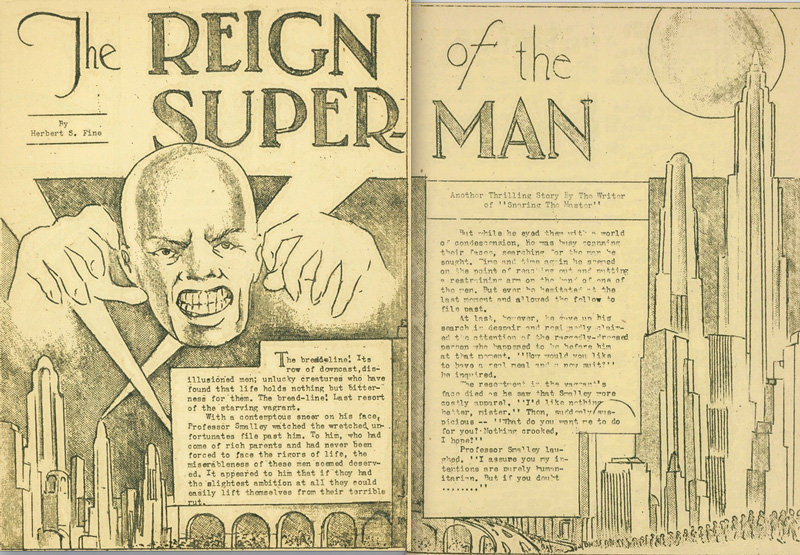
Science Fiction: The Advance Guard of Future Civilization. Herbert S. Fine (Jerry Siegel) and Joe Shuster. Wikimedia Commons / Public DomainFor context, regular magazines had been around for centuries, since they first emerged around the 1600s. Zines provided a unique space for cultural expression that simply wasn’t available in the more popular, mass printed publications. Their under-the-radar spirit and creative independence allowed zines to approach topics divergently: they became an outlet for those who defied commonly-held ideas. In the Eastern Bloc, samizdat took that same DIY impulse into political resistance against censorship. After science fiction fans popularized the format, other creative 20th century movements leveraged zines to spread ideas among niche, passionate audiences. This was true for the punk scene of the 1970s and third-wave feminism of the 1990s. Zines were also crucial for the civil rights and antiwar movements, and political zines used commentary on social issues to encourage activism. One early example from fan-driven publishing was Crawdaddy!, one of the first rock music zines, which began in 1966.
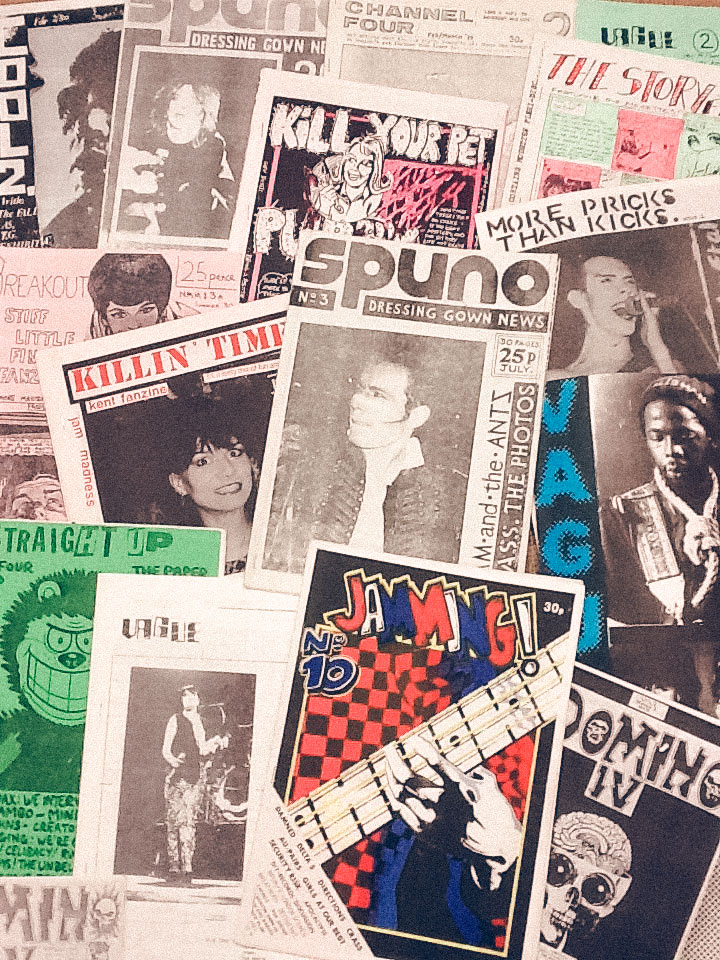
A Selection of UK Punk Fanzines. Wikimedia Commons.
Young feminists in D.C. and Washington State also published their own free zine called Riott Grrrl, which inspired a movement by the same name. This was the early 1990s, and the zine covered the alternative music scene, as well as unique perspectives on women’s role in society. Bikini Kill, one of the bands associated with the publication, published this line in a manifesto that summarizes the spirit of the zine: “Because us girls crave records and books and fanzines that speak to us, that we feel included in, and can understand in our own ways.”
While unique, feminism and punk are still relatively popular themes for the zine format. You will find that these publications are the perfect vehicle for all kinds of peculiar, ultra-specific themes. Record, for example, is devoted to niche music communities, while Bedspread Zine showcases photos of beds.
You can find an interesting list of zines by themes (art, science, poetry, sports, among others) in this dedicated wiki site. If you’re interested in meeting some zine creators in person, make sure to check out any of the fairs and festivals organized around the world here.
The Zine’s Handmade Aesthetic
Let’s take a look at the trends that shaped what zines look like today. These independent publications didn’t have the budget for offset printing, and the copy machine didn’t make it to the market until the 1960s. The early zine creators had to reproduce their work with mimeographs, low-cost duplicating machines that forced ink onto paper using a stencil. Mimeos, as they were called, cost between $50 and $100 in 1950 — equivalent to about $500-1000 USD today.
How Mimeographs and Copy Machines Shaped The “Zine Look”
To “copy” your zine, you needed a mimeograph stencil. This stencil had your text, layout, and illustrations either typed with a typewriter or cut with a stylus. You needed a different stencil for every page, so you can already start to see why zines are usually a single-page, folded format. Mistakes were a pain, since you had to apply a delicate correction fluid that essentially “sealed” the stencil so you could re-type or rewrite. Again, a pain.
As you can imagine, mimeos were mostly available at schools and offices, so that’s where ziners did their work. This rudimentary, scrappy method was a perfect match for the alternative ideas it helped spread.
Copiers, however, changed the game. Think about it: this quick copy machine could suddenly reproduce your content by the hundreds in a matter of minutes, at a much lower cost. All you needed was an original copy to duplicate, and that’s where the zine aesthetic truly emerged: in a world without personal computers, designs were made by simply handwriting, collaging, and all kinds of DIY techniques. The “zine look” is unequivocally handcrafted, homemade, and unpretentious.
Needless to say, the boom of the personal computer and printer opens a whole new spectrum of options when it comes to digital publishing. Mistakes are no longer painful to fix, multi-page layouts are made incredibly easy with desktop software, and full-color printing is accessible to all. Pixel perfection is attainable. Even in the digital age, many creators still return to this handmade form, producing work that reinforces originality and reconnects with zine culture’s DIY roots.
Creating Your Own Zine: A Guide to Zine Making
We’ve covered the edgy, non-conforming style of zines throughout this article. Perhaps you’ve identified a topic that triggers your interest and you’re feeling inspired to launch your own publication, with a focus that can span many genres, from personal stories and essays to comics, artwork, poetry, or music scenes. No matter how niche you think this topic is, as long as a small, committed group of people are drawn to it, there’s room for a zine, and it can give writers and artists space for writing and sharing work outside mainstream channels. Let’s now take a look at some of the visual decisions involved in creating your own publication.
Handcrafting and Mixed Media in Art Zines
Creating a master document by hand and copying it using some kind of retro printing method is a popular approach, but there are digital assets that can help you achieve a similar, authentic-looking effect. You can also try a mixed media approach: printing out some of the graphic elements in your zine and physically collaging them to create a unique layout, which is especially useful for artists building art zines, comic zines, or a photo zine. It can be difficult to find the content that you’re looking for in magazines or other print sources, so start by gathering inspiration from existing images, artwork, and printed ephemera before recombining them into a new layout. Printing, cutting and pasting words, illustrations, patterns, and frames will bring your zine to life. As always, make sure to check out the license terms for the asset you are downloading to make sure that they match your intended use.
Zine Layout
There are many different reasons to use a folded layout for your zine. Before you start, plan your layout so the sequence, spacing, and content work together from the first fold. On one hand, it simplifies the production process, making the document cheaper and easier to copy/print, and A5 is a popular size because it’s cost-effective to print. On the other hand, the fold conveys the format’s origins and adds visual interest to your piece. Check out this great tutorial by Rookie Magazine to learn how to cut, fold, and design an A3 zine. Downloadable templates can help keep layouts and margins accurate across different materials and pages built for photography. Leave a ½ inch border around images and text.
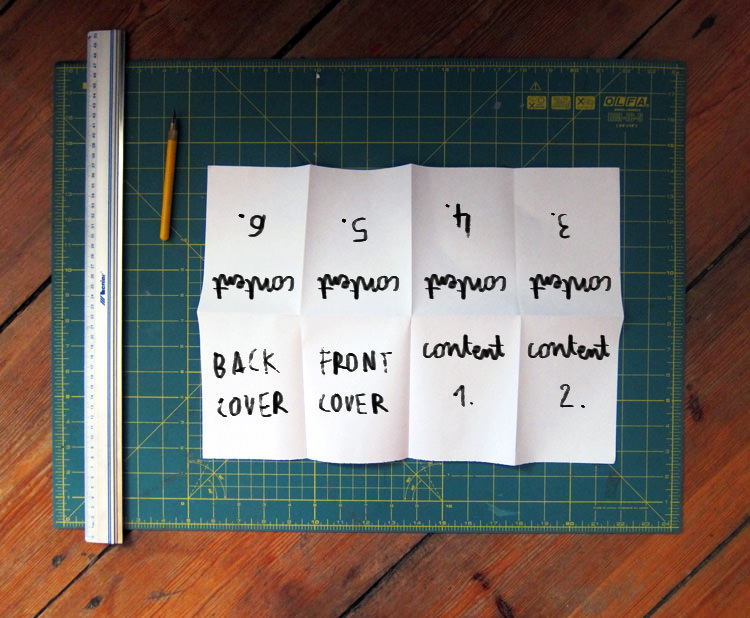
This 9-step tutorial by Instructables also does an outstanding job at showing you how to take your zine from a blank sheet of paper to the copy machine, and out to the world. If you want to get more of an insider’s perspective, this inspiring documentary by Melissa Campbell explores the zine-making process from the creator’s point of view:
Cut & Paste from Melissa Campbell on Vimeo.
Shop owner Pat Higgins from Artcore Supply Co. has also created a handy toolkit to give you a head start. It includes panel layouts, graphic styles, and a fold-and-staple page dummy.
Typography in Zines
The “zine aesthetic” that I’ve discussed is related to specific kinds of typefaces and lettering. Here are some textured, unique fonts that you can try in order to replicate that textured, scrappy vibe:
Check out more typewriter fonts here.
Zine Illustrations, Frames, and Patterns
Mixing and matching graphics is one of the most fun parts of this design project. There are tons of grunge, zine-inspired assets you can try, but here are some of my favorites:
Textures and Effects
Recreate that copy machine aesthetic with all-digital tools. There are many intricate, detailed kits out there that will make your zine production process much simpler while retaining an authentic look:
Printing Your Own Zine
These are exciting times for zine makers. Virtually every printing technique is an online course away, and hardware has become widely accesssible. As if that weren’t enough, the new print-on-demand model allows you to work with skilled designers to proof and reproduce your zine reliably — no matter where you are. Check out Blurb and NewspaperClub to outsource your zine printing.
Your turn!
Do you know of any other zine-making tools or resources? Leave a comment below!
Products Seen In This Post:
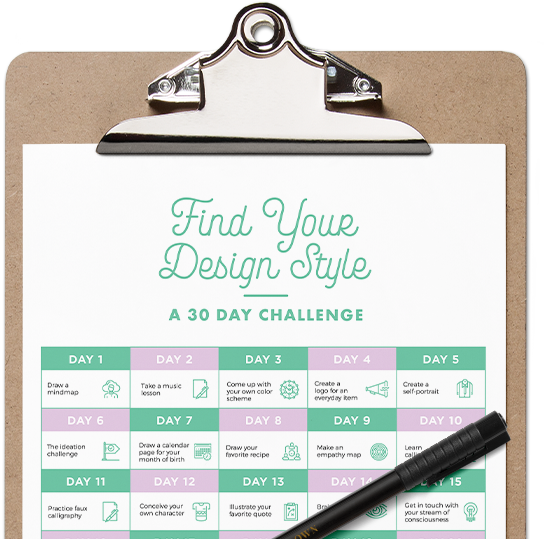
Having a hard time finding your unique design style? This creativity challenge will get you on the right track.
Download it here






Welcome! I'm Ciera, I help passionate creatives, small businesses and bloggers attract their ideal customer through strategic branding and cohesive visuals like the marketing templates you see here!
View More Posts


4 Comments