



Freelancing can be a constant struggle to find that perfect price to charge your clients. On one hand, nobody wants to charge so little that it’s not worth their time, but on the other hand, there’s the fear that charging too much will drive your clients away. This fine line between the two sides of the fence can feel like walking a tightrope, so here’s some advice to take some of the stress out of the process.
There’s a lot of information out there about this topic so it’s not surprising that a lot of it is contradicting and confusing. However, there are a few golden truths that always hold, and here they are, step by step.
1. Find Your Equilibrium
In economics, the supply and demand model is the foundation of all pricing. Luckily for us, it also perfectly describes the tightrope situation described above. There are three variables in the supply and demand model: supply, demand, and price. Where the supply and demand curves intersect is the price equilibrium, which is essentially the optimal price to be at.
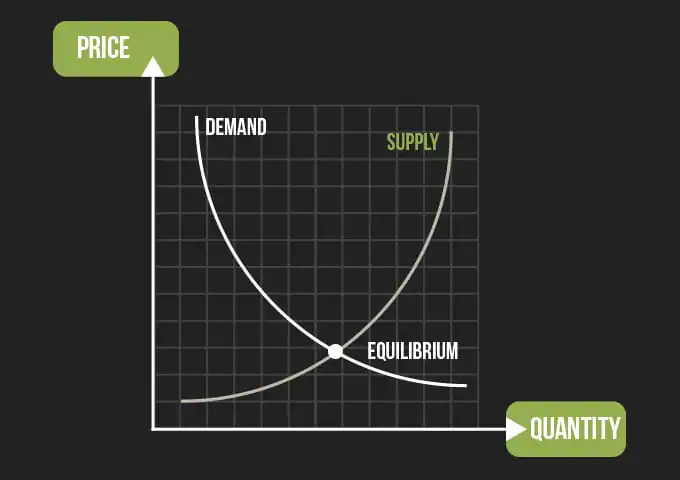
In the case of a freelancer, supply is generally fixed. You can only produce so much work, but fortunately, you can always adjust your price. As you increase your price, your demand falls, and as you decrease your price, demand for your services should increase, theoretically. There is an equilibrium point for this as well, and it’s worth your time to consider this.
If you have no clients and spend most of your time twiddling your thumbs, it doesn’t make sense to charge exorbitant rates. Because of this, many freelancers offer introductory rates to build up a client base, and slowly increase these rates over time.
On the flipside, if you have too many clients that you have to start rejecting some because you don’t have the time to service them all, it’s probably time to start increasing your rates. Your optimal price will be when you’re working the hours you want but have enough demand for your work that you’re never wasting work time.
2. Do Your Research
For many of us, the situation where you have more clients than you can handle is an idle dream. In this case, you need to set a starting point for your rates. Make sure you do your research. If you’re not the hottest product out there, you’ll be competing with the rest of the market. You can choose to set yourself at the market average, or undercut that price to try and attract some new clients.
However, if you do undercut prices, make sure you specify it as a temporary promotion. There are two reasons for this: Firstly, if you’re too, cheap people are going to wonder about the quality of your work, and secondly, it makes it less of a shock to your clients when you eventually do increase your rates (which should be your goal).
So for the freelancer who isn’t yet drowning in offers, find out what other people offering your services charge and consider charging a bit less than that for a “Limited time onlyâ€. Deliver quality work and those clients will likely stay with you, even when you increase you rates because they’re already expecting you to increase them eventually.
3. Differentiate Yourself
Now we’re arriving closer to the actual negotiation. Although step two specifies that you should be researching what other providers of your service charge, ideally there should be nobody that provides quite the services you provide.
Sure, there could be a million people who design websites, but you’re not just another one of the crowd. Maybe you studied at a specific school that is known to produce a certain style, or your work is influenced by a certain artist and results in an end product that has a different flair to it. Maybe you’ve done work for some big names before, or have experience your client’s field as either an employee or consumer (if you’re a gamer, you’re more likely to design something that will appeal to gamers).
“I design websites†is never enough when pricing. Like a resume and a cover letter, each client should be approached with a different focus that highlights why you’re a cut above everyone else, which justifies why you charge above everyone else.
Adapt to Your Circumstances
In the end, there is no arbitrary number that you should be charging. It all depends on your own circumstance, and an experienced freelancer will have a feel for how much they’re worth based on the three steps above. If you know how much your time is worth so that you will never have too many or too little business (step one), and you know how much everyone else in the market is charging (step two), and you know why you’re different to everyone else and what your selling points are (step three), then you should have a range of prices that you know you’ll be willing to work for. The rest is negotiation.
Negotiating
You won’t always be able to charge your highest range. There will be clients that are just stubborn and refuse to acknowledge that your specialities are worth more. If you have a list of clients queued up, this isn’t an issue. You can just move on. However, if this is a special client whose business could turn into something bigger, or if you don’t have any work lined up, then you will have to adapt. Some negotiation skills could go a long way, but if you present your case using the knowledge you should have gained in the above three steps, and your client doesn’t accept your highest figure, you can lower it down to your lowest acceptable number.
You’re Worth it
If you did steps one to three properly, you should never be accepting anything under your lowest rate because anything under that rate will not be worth your time. It’s also worth remembering that as your circumstances change, so will your range of acceptable rates.
Igor Ovsyannykov is a 23 year old geek, blogger, and designer. He mostly spends his time working and sharing resourceful knowledge with others. He also enjoys working out, photography, spending time with friends, and losing his mind to deep house music. If you would like to reach him, send an email to inspirationfeed@yahoo.com.
Header image created using Illuminati (maybe!)
Download these worksheets and start practicing with simple instructions and tracing exercises.
Download now!








Making beautiful design simple & accessible to all.
View More Posts



8 Comments